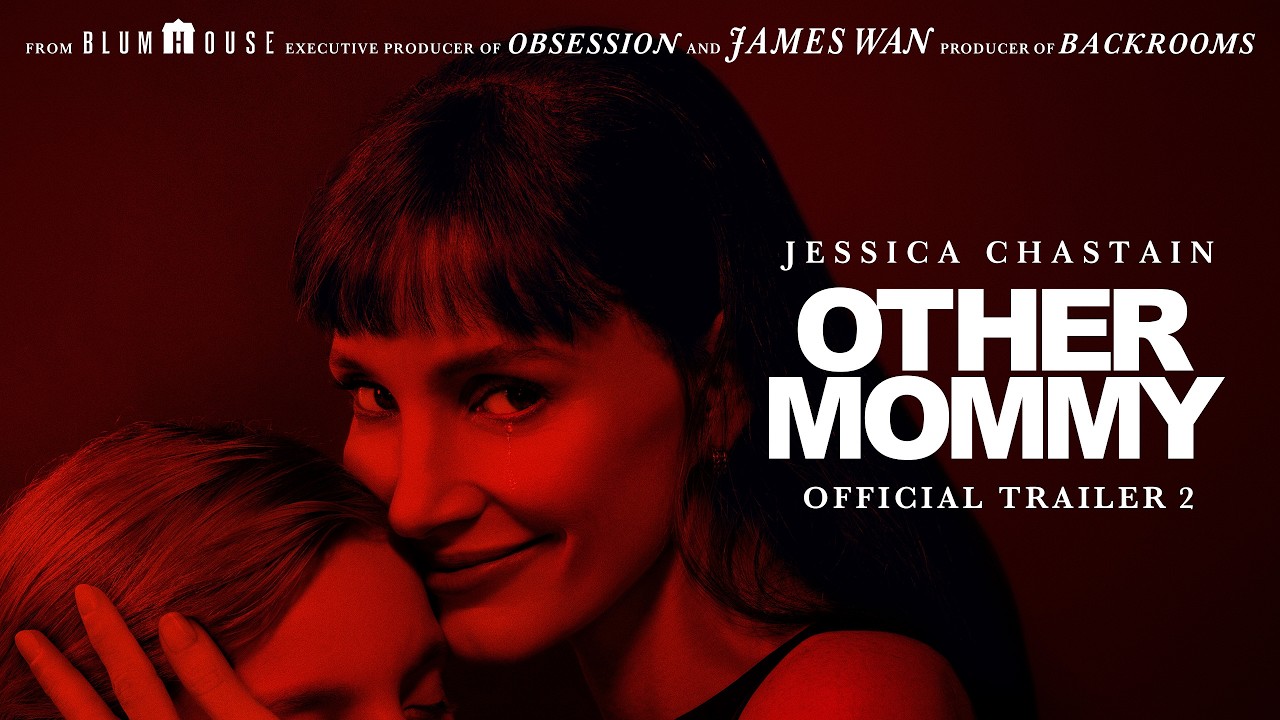
Other Mommy (2026) Box Office Verdict: Jessica Chastain’s D+ CinemaScore Horror Disaster or Blumhouse’s Next Franchise?
Cinema Hook & Cultural Context: Why Rob Savage’s Domestic Nightmare Matters in the 2026 Horror Landscape
The autumn of 2026 has delivered the strangest horror battleground of the year, and it arrives wrapped in the deceptively gentle title Other Mommy. On paper, this is the kind of package that trade analysts circle months in advance: Blumhouse and Atomic Monster joining forces, James Wan producing, Rob Savage directing fresh off his ascension as one of the most kinetic genre filmmakers of his generation, and Jessica Chastain—an Oscar winner with genuine commercial muscle—anchoring a dual role as both a fracturing mother and the demonic entity wearing her face.
Add a source novel from Josh Malerman, the author behind Bird Box, and you have a theatrical proposition engineered for the post-Barbarian, post-Smile marketplace where intimate domestic terror routinely converts into nine-figure global grosses.
What makes Other Mommy culturally significant, however, is not merely its pedigree but the specific anxiety it taps. This is a horror film built on the emotional neglect of a child, on a marriage hollowed out by infidelity, and on the terrifying idea that the thing pretending to love you most is actually wearing your family’s face to get inside your heart.
In a 2026 release calendar saturated with nostalgia sequels and IP revivalism, Malerman’s premise—a seven-year-old girl named Bela who names the closet entity “Other Mommy” and is seduced by its constant, sinister availability—carries a genuinely original psychological hook. The film’s epigraph, that demons covet aliveness above all else, reframes possession not as malice but as envy, and that single idea gives the movie its thematic spine.
The cultural context surrounding the release is equally charged. Jessica Chastain returning to horror after Mama and It: Chapter Two signals a performer deliberately curating a genre-forward phase of her career. Rob Savage, meanwhile, arrives at his biggest studio canvas after Host, Dashcam, and The Boogeyman, and the industry has been watching closely to see whether his lo-fi, screen-life instincts can scale to a 3,200-theater wide release.
That question—whether a filmmaker known for scrappy intensity can deliver mainstream multiplex terror—sits at the heart of the film’s commercial narrative. And then there is the elephant in the room: a D+ CinemaScore. In modern horror economics, that grade is simultaneously a warning siren and a marketing puzzle, because the genre has repeatedly proven that audience hostility and profitability can coexist.
Main Cast & Crew: The Full Production Ledger
The ledger above reveals a production assembled with unusual efficiency. A 93-to-94-minute runtime is notably lean for a supernatural horror built on escalating dread, and it suggests Savage prioritized propulsion over atmosphere-building. That choice cuts both ways: short runtimes historically help horror films secure more daily shows per screen, which directly inflates opening-weekend revenue potential, but they also leave little room for the emotional excavation the novel’s adultery-and-neglect subplot demands.
The supporting roster, particularly Jay Duplass as the devoted stay-at-home father and Dichen Lachman as a paranormal scientist, signals that the film attempts to balance familial realism with expositional genre machinery.
The James Wan producing credit is not incidental branding—it is a commercial signal. Atomic Monster’s involvement guarantees the film was marketed with the same precision as the Conjuring and M3GAN slates, complete with trailer placement in front of a tentpole as massive as The Odyssey. That single positioning decision likely drove a meaningful share of the film’s 78-point buzz index, because theatrical trailer exposure before a four-quadrant blockbuster remains one of the last mass-reach marketing tools in an increasingly fragmented media environment.
Quick Look Verity Movie 2026 HDHub4u bi | Release Status, Screen Counts, Theatrical Run & Buzz
The problem, as the weekend would prove, is that mass awareness without mass satisfaction produces a violent second-day collapse.
Visual Grandeur & Cinematography: Scaling Lo-Fi Terror to the Multiplex
The most fascinating creative tension inside Other Mommy is the collision between Rob Savage’s established visual grammar and the demands of a Blumhouse wide release. Savage built his reputation on immediacy: Host weaponized webcam framing and real-time dread, while Dashcam embraced chaotic, disorienting POV aesthetics.
Translating that instinct to a film about a child being stalked by a smiling maternal doppelganger should, in theory, produce something uniquely unnerving—a horror film where the camera itself feels like it is watching from inside the closet.
What the finished film delivers, according to the critical autopsy, is a far more conventional visual package punctuated by CGI flourishes that actively undermine its tension. Multiple reviewers flagged the entity’s digital realization as a core failure, describing “woeful CGI” and an “endless parade of ineffective jump scares” where the monster’s appearances are staged for volume rather than cumulative dread.
This is the classic Blumhouse trap: a provocative concept executed through a scare-delivery system calibrated for trailer moments rather than sustained psychological pressure. The domestic spaces—the bedroom, the hallway, the closet threshold—are where the film should breathe, because the source material’s power comes from the intimacy of the threat.
When the camera abandons that intimacy to chase a jolt, the film loses its most distinctive asset.
There are, to be fair, sequences where the visual ambition lands. Chastain’s dual performance requires cinematography that can subtly differentiate Ursula from Other Mommy without resorting to obvious visual tells, and critics who praised her work implicitly acknowledged that the film’s framing and lighting occasionally achieve that uncanny doubling effect.
The entity’s ever-present smile is a compositional choice that borrows from the uncanny-valley playbook of Smile and M3GAN, and in the film’s better moments, that grin functions as a visual thesis statement: love, in this movie, is something that watches you while you sleep. The production design of the family home similarly leans into oppressive normalcy—beige walls and warm lamps that make the supernatural intrusion feel like a violation of domestic safety rather than a gothic haunting.
In Focus Digger Movie 2026 HDHub4u bi | Release Status, Screen Counts, Theatrical Run & Buzz
Where the visual execution fundamentally stumbles is in escalation logic. Horror cinematography must modulate: stillness before chaos, negative space before the reveal, silence before the scream. Other Mommy, by near-universal critical account, front-loads its scares and then keeps escalating without rhythm, so that by the finale—which reportedly drew unintended laughter—the audience has been desensitized rather than worn down.
That is a cinematographic and editorial failure as much as a directorial one, and it explains the cavernous gap between the film’s strong opening projections and its catastrophic D+ audience grade. The camera cannot manufacture dread the script has not earned, and no amount of Dolby Atmos rumble can compensate for a scare sequence without architecture.
Target Demographic & Screen Count Estimation: Who Was This Film Actually For?
The demographic math on Other Mommy was always going to be a tightrope walk, and understanding it requires separating the film’s marketing pitch from its actual content. The campaign sold a supernatural horror thrill ride with a movie-star dual performance—clean, high-concept, and broadly appealing to the 18-to-34 horror faithful who turned Smile and M3GAN into franchise starters.
But the film’s actual narrative engine is a child’s emotional abandonment, a marriage destroyed by an affair with a family friend, and a paternity secret withheld from a seven-year-old. That is heavy, domestic, adult melodrama dressed in monster clothing, and it creates a fundamental mismatch between who bought tickets and what they received.
The R rating correctly excludes families, but it also creates a secondary problem: the film’s most emotionally invested potential audience—parents who might connect with the material’s examination of fractured families—are precisely the viewers most likely to find a child-in-peril narrative genuinely distressing rather than entertaining.
Horror enthusiasts, meanwhile, arrived expecting visceral scares and instead encountered what reviews described as derivative plotting, cheap jump scares, and a child-centered premise too intense for casual viewers yet too sentimental for gore hounds. This is the demographic no-man’s-land that produces D+ CinemaScores: a film that satisfies neither the genre core nor the mainstream crossover audience it was marketed toward.
The 3,200-theater North American footprint represents a full-throttle wide release, meaning Blumhouse and Atomic Monster committed to a strategy of maximizing opening-weekend volume before word-of-mouth could metastasize. In practice, that decision converted the film’s star power and trailer awareness into a solid Thursday preview number—$3.6 million—and opening projections in the $20M–$27.5M range.
But wide release is a double-edged instrument for a film with weak audience reception. Every additional screen amplifies the second-weekend collapse, because negative exits circulate faster than positive ones, and a D+ grade becomes a self-fulfilling prophecy across multiplexes nationwide by Saturday evening. The India footprint of 1,681 shows across 99 cities, paired with a modest ₹94.11 lakh advance, confirms that the film’s international footprint was built on Chastain’s name recognition and the Blumhouse brand rather than deep local appetite.
Top Story HDHub4u Day Drinker Movie 2026 | Release Status, Screen Counts, Theatrical Run & Buzz
Commercial Economics & Box Office Breakdown: The $19M Gamble and Its Aftermath
Horror remains the most forgiving genre in commercial cinema because its budgets are engineered for asymmetry: a $19 million production can theoretically return nine figures worldwide if the concept connects. That asymmetric math is precisely why Blumhouse’s model has survived for two decades, and it is why Other Mommy is not yet a financial obituary despite its brutal critical reception.
To understand whether the film becomes a write-down or a quiet winner, we have to walk through the revenue architecture carefully.
The production budget sits at a reported $19 million, which is modest by studio standards but substantial by Blumhouse norms. Add marketing—likely in the $20M–$30M range given the 3,200-theater push and the prized trailer placement before The Odyssey—and the film’s total investment probably lands somewhere between $40M and $50M all-in.
The conventional theatrical breakeven threshold for a film at that scale is roughly 2.5x the production budget in worldwide gross, or approximately $47.5 million. With Thursday previews at $3.6M domestic and opening weekend projections spanning $20M–$27.5M, the film is pacing toward a domestic finish that could plausibly reach $45M–$60M if it holds with even moderate stability.
Internationally, the calculus is murkier: overseas numbers remain officially unconfirmed, but horror traditionally overperforms in Latin America and parts of Southeast Asia while underperforming in markets where the genre skews niche.
The India picture is instructive as a microcosm. A ₹94.11 lakh advance from 30,100 tickets across 1,681 shows, with NCR leading at ₹15.64 lakh, followed by Mumbai at ₹14.81 lakh and Hyderabad at ₹11.47 lakh, is a respectable but unspectacular start for a Hollywood horror import. It suggests the film’s Indian audience is concentrated in metro multiplexes among English-speaking genre fans, with negligible mass-market penetration—consistent with the film’s inability to convert its high concept into broad cultural conversation.
For context, breakout Hollywood horror in India typically multiplies its advance significantly through weekend walk-ins, whereas a film with a D+ equivalent reception stagnates after day one.
The streaming afterlife will determine the film’s ultimate profitability. Peacock holds the first window, estimated around November 2026, with Netflix taking the second window around March 2027. For a Blumhouse title with a recognizable star, these output deals provide a guaranteed revenue floor that can rescue a theatrical underperformer from outright loss.
Recommended HDHub4u Heart Of The Beast Movie 2026 | Release Status, Screen Counts, Theatrical Run & Buzz
The theatrical run, however, still functions as the marketing engine for that downstream value—which means the D+ CinemaScore and 47% Popcornmeter are not merely embarrassing statistics; they are valuation inputs. A film audiences actively dislike generates weaker streaming sampling than a film they merely missed, and that distinction can cost tens of millions in perceived library worth.
Today’s Reviewers Pulse: Critic & Trade Consensus Matrix
The critical consensus on Other Mommy is not mixed—it is a rout. Rotten Tomatoes settled in the 17–19% range, Metacritic landed at 33/100, and the trade verdict was near-uniformly damning. Critics described the film as “more silly than scary,” “dumb,” “excruciating,” and, in one especially sharp dismissal, “Jessica Chastain’s worst movie in a long time.” The recurring critiques form a coherent pattern: an “endless parade of ineffective jump scares,” “woeful CGI,” “nonsensical storytelling,” and a finale that provoked unintentional laughter rather than terror.
When a horror film’s climax becomes comedic to a paying audience, the failure is structural, not cosmetic—it means the film’s tonal control deserted it precisely when it needed maximum conviction.
The one near-unanimous point of praise is Jessica Chastain herself. Critics acknowledged that her dual performance as Ursula and Other Mommy is committed, technically demanding, and occasionally chilling, with several reviewers noting that the role’s failure to land rests on the material rather than the performer. Arabella Olivia Clark, the young actress carrying Bela, also earned consistent acclaim as a standout, with her work described as the emotional anchor the film too often abandons.
That dual praise is commercially meaningful: it gives the film a residual prestige argument for awards-adjacent conversation and streaming curation, even as its genre credentials collapse.
Audience word-of-mouth compounds the critical damage rather than countering it. CinemaScore’s D+ places the film in genuinely rare territory—a grade typically reserved for sequels that betray their fanbase or horror films with misleading campaigns. Rotten Tomatoes’ 47% Popcornmeter confirms that the hostility is not a critics-only phenomenon.
In India, BookMyShow registered a 6.1/10 from 290+ votes, with user reviews citing “amateur direction,” “boring,” and the damning complaint that it “didn’t live up to the trailer.” That trailer-versus-film gap is the campaign’s original sin: the marketing promised a relentless monster movie and delivered a morose family drama with a digital antagonist.
When audiences feel misled, they do not merely dislike a film—they actively warn others away, which is why the second-weekend drop for Other Mommy will be the number to watch.
Trade Alert Hope Movie 2026 HDHub4u Review Details
Frequently Asked Questions
Is Other Mommy (2026) worth watching in theatres?
For dedicated horror completists and Jessica Chastain devotees, the dual performance alone justifies a matinee ticket, since her work as both Ursula and the entity is the film’s most consistently praised element. For general audiences, however, the D+ CinemaScore, 17–19% Rotten Tomatoes score, and widespread reports of ineffective scares and a laughable finale make a theatrical trip difficult to recommend.
The film is 93–94 minutes and rated R, so it demands a tolerance for gore and a high threshold for derivative supernatural plotting. Most viewers would be better served waiting for the Peacock first window, estimated around November 2026.
What is Other Mommy about, and what is the entity’s goal?
Based on Josh Malerman’s novel Incidents Around the House, the film follows seven-year-old Bela, whose already strained family—mother Ursula and stay-at-home father Russ—is invaded by a closet entity Bela names “Other Mommy.” The creature resembles her mother, always smiles, always wants to play, and repeatedly asks, “Can I go inside your heart?” Its ultimate goal is possession: to inhabit Bela’s body and experience living embodiment, driven by the film’s stated premise that demons covet aliveness above all else.
The horror operates as a psychological siege that weaponizes Bela’s fear that her fractured family will collapse.
Why did Other Mommy receive a D+ CinemaScore?
The D+ grade reflects a fundamental mismatch between marketing and content. Audiences were sold a jump-scare-heavy monster movie with a movie-star dual role, but received a somber domestic drama about infidelity, emotional neglect, and a child’s abandonment, punctuated by CGI scares critics called “woeful” and “ineffective.” The R rating excluded families, horror veterans found the plotting derivative, and the finale reportedly generated unintended laughter.
When a film satisfies neither the genre core nor the mainstream crossover audience it targeted, CinemaScore collapses—and D+ is the statistical signature of that failure.
How much did Other Mommy cost, and what does it need to break even?
The reported production budget is $19 million. Factoring in a marketing spend likely between $20M and $30M for a 3,200-theater wide release with premium trailer placement, the all-in investment probably sits between $40M and $50M. The conventional theatrical breakeven threshold is roughly 2.5x the production budget, or approximately $47.5 million in worldwide gross.
With $3.6M from Thursday previews and opening weekend projections of $20M–$27.5M domestic, the film needs strong international holds and its Peacock/Netflix output deals to avoid a write-down.
Where will Other Mommy stream after its theatrical run?
Peacock holds the first streaming window, estimated around November 2026, consistent with Blumhouse’s established output arrangement. Netflix is expected to take the second window, estimated around March 2027. No official OTT rights valuation or satellite partner has been confirmed by the studio. For international viewers, the streaming timeline may vary by territory depending on existing output deals, and no overseas streaming dates have been officially announced.
How does Other Mommy compare to Rob Savage’s previous films?
Savage built his reputation on immediacy and resourcefulness—Host used webcam framing and real-time tension, while Dashcam embraced chaotic POV disorientation. Other Mommy represents his largest studio canvas, backed by Blumhouse and Atomic Monster with James Wan producing, and critics generally agree the scale-up exposed a mismatch between his lo-fi instincts and the demands of a 3,200-theater supernatural horror.
Where his earlier work derived dread from constraint, this film’s reliance on CGI entity work and volume-based jump scares drew the harshest notices of his career, even as Chastain’s performance earned consistent praise.
Data Attribution Registry
- ComingSoon.net: Other Mommy Is Already Crushing The Social Reckoning at the Box Office Following Thursday Previews – https://www.comingsoon.net/movies/news/2205355-other-mommy-crushing-social-reckoning-box-office-thursday-previews
- Sacnilk: Other Mommy advance booking live – https://beta.sacnilk.com/livetracker/Other_Mommy_2026_Advance-Booking-Live
- Yahoo News Malaysia: “Other Mommy” panned as mother of all horror bombs: ‘More silly than scary,’ and ‘excruciating,’ say critics – https://malaysia.news.yahoo.com/other-mommy-panned-mother-horror-192602103.html
HDHub4u Media Integrity
The cinematic data, buzz metrics, and box office forecasts published above have been curated independently by our editorial team. We firmly support the theatrical industry and do not host or encourage unauthorized media downloads.
Editorial Note: Independent trade analysis and streaming guide for Other Mommy Movie 2026 HDHub4u bi | Release Status, Screen Counts, Theatrical Run & Buzz. We support official theatrical and legal OTT releases.