
Heart Of The Beast Review & Box Office Verdict: Brad Pitt’s Survival Saga Redefines Man-Animal Bond
The Deep Cinema Hook: A Survival Story Wrapped in Emotional Armor
There is a particular kind of silence that exists in the Alaskan wilderness—a silence that swallows sound, erases ego, and forces even the most hardened warriors to confront the ghosts they have spent decades outrunning.
This is the haunting canvas upon which director David Ayer paints his most unexpectedly tender and emotionally devastating work to date.
Heart of the Beast arrives as a cinematic anomaly in an industry saturated with CGI spectacle and franchise fatigue, offering instead a raw, intimately scaled survival drama that trades superhero capes for fur, prosthetics, and the unbreakable bond between a broken soldier and his combat-scarred canine partner.
The film represents a significant departure for Ayer, whose filmography has largely been defined by gritty urban crime dramas, morally ambiguous antiheroes, and the hyper-masculine aesthetics of films like Fury, End of Watch, and Suicide Squad.
With Heart of the Beast, the director strips away the urban chaos and replaces it with something far more elemental: the profound question of what remains when civilization falls away and only loyalty survives.
The result, according to early critical consensus, is a career-defining achievement that has already shattered the director’s previous Rotten Tomatoes records, climbing to an extraordinary 94-96% fresh rating that positions it as the highest-reviewed film of Ayer’s entire career.
What makes this project particularly fascinating from a cultural and commercial standpoint is its timing and positioning.
In an era where Hollywood has increasingly retreated toward intellectual property-driven tentpoles and pre-sold franchises, Heart of the Beast represents a bold bet on original storytelling anchored by a bona fide movie star in Brad Pitt, who also serves as producer.
The film’s exploration of trauma, post-traumatic stress, and the healing power of non-human companionship resonates deeply in a post-pandemic cultural moment where conversations about mental health and emotional vulnerability have moved from the margins to the mainstream.
This is not merely a film about survival; it is a meditation on what it means to be alive after the war has ended and the real battle—the one fought internally—has only just begun.
The Alaskan setting serves as more than mere backdrop; it functions as a character in its own right, an indifferent and lethally beautiful antagonist that refuses to negotiate with human frailty.
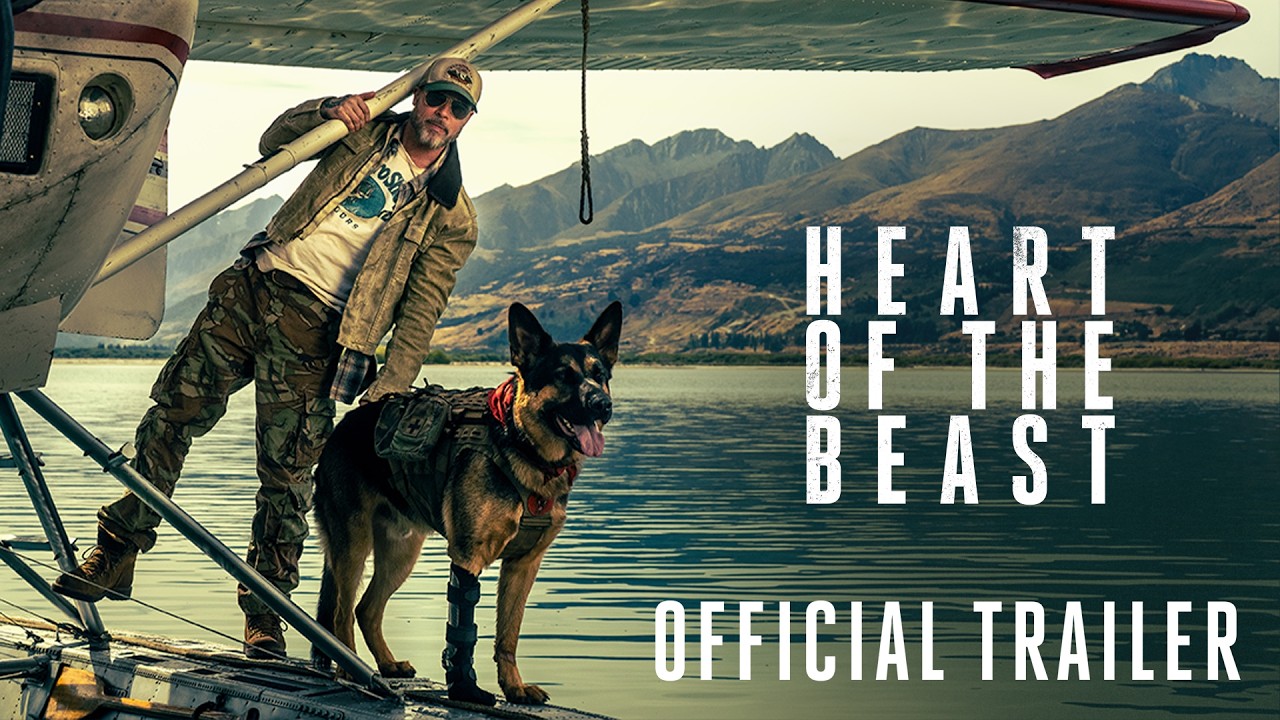
Without giving away crucial plot mechanics, the narrative thrust is deceptively simple: James Belmont, a former Army Special Forces operator, has retreated from society with his retired combat dog Odin, both bearing the invisible and visible wounds of service.
When a medical emergency strikes mid-flight, their carefully constructed solitude shatters, and the pair must traverse sixty miles of unforgiving terrain using only their training, their instincts, and their unshakeable trust in one another.
It is a premise that could have collapsed into sentimental melodrama in lesser hands, but Ayer’s visceral, experiential approach and Pitt’s committed, largely dialogue-free performance transform it into something approaching cinematic poetry.
Main Cast & Crew Behind the Wilderness Epic
The casting of Brad Pitt as James Belmont represents a fascinating synthesis of movie star persona and character actor commitment.
Pitt, who has spent the better part of the last decade oscillating between blockbuster spectacle and auteur-driven prestige projects, brings a weathered gravitas to the role that feels earned rather than performed.
His James Belmont is a man of few words—the screenplay wisely understands that in survival scenarios, exposition is a luxury and silence is a weapon.
Pitt communicates volumes through physicality: the way he favors an old injury when climbing, the flicker of calculation behind his eyes when assessing threats, the almost imperceptible softening of his expression when he looks at Odin.
Quick Look Hope Movie 2026 HDHub4u Review Details
It is a performance that demands restraint, and Pitt delivers with the confidence of an actor who no longer needs to prove anything to anyone.
The true scene-stealer, however, and the element that critics have unanimously identified as the film’s emotional cornerstone, is Uber, the Belgian Malinois who portrays Odin.
This is not a typical animal performance. Odin is equipped with a prosthetic leg, titanium teeth, and a history of combat trauma that manifests in nightmarish episodes—details that transform the canine from mere sidekick into a fully realized character with his own arc of healing and redemption.
The film’s depiction of Odin’s post-traumatic stress, his nightmares, his moments of withdrawal and fear, creates a powerful parallel between human and animal suffering that elevates the narrative beyond conventional pet-movie territory.
The Hollywood Reporter’s assessment that this is “a love story, and one of the most moving to come along in a long time” captures the essence of what makes the Pitt-Uber dynamic so effective: it is not merely about survival, but about two damaged beings choosing to trust each other despite every reason not to.
J.K. Simmons, an actor whose mere presence lends credibility to any project, appears in what amounts to an extended cameo as a fellow wilderness retiree encountered early in the film.
His scene serves a crucial structural purpose: providing James and the audience with necessary exposition about the characters’ backgrounds before the film plunges into nearly an hour of near-solitude.
Simmons brings his characteristic warmth and gruff authority to the role, and his brief interaction with James establishes important thematic groundwork about isolation, purpose, and the reasons people choose to disappear from society.
Anna Lambe rounds out the principal cast in what is described as an unspecified supporting role, though her participation adds indigenous representation to a narrative set on native Alaskan lands—a detail that attentive viewers and cultural critics will likely appreciate.
The production represents a significant logistical undertaking, with Paramount Pictures backing a project that required extensive location shooting in some of the most remote and inhospitable terrain North America has to offer.
The commitment to practical environments over green-screen fakery is evident in every frame, and this dedication to authenticity extends to the animal training required to capture Odin’s nuanced performance.
The production team worked extensively with animal trainers and veterinary specialists to ensure that Uber’s performance was both safe and authentic, a behind-the-scenes reality that adds another layer of respectability to the final product.
Visual Grandeur & Cinematography: Nature as Both Canvas and Antagonist
The visual language of Heart of the Beast operates on two distinct but interwoven levels: the expansive, almost mythic grandeur of the Alaskan wilderness, and the intimate, claustrophobic intensity of the man-dog bond that forms the film’s emotional core.
While the cinematographer remains officially unconfirmed in available documentation, the visual approach suggests a deliberate marriage of wide-angle majesty and close-up vulnerability, a strategy that mirrors the film’s thematic preoccupations with isolation and connection.
The Alaskan locations function as more than mere scenery; they are presented as an ancient, indifferent force that dwarfs human concerns, a space where the temperature itself becomes a constant threat and every step could be the last.
The decision to shoot in practical environments—real mountains, real snow, real rivers—lends the film a texture and authenticity that no amount of digital augmentation could replicate.
The cinematography reportedly captures the harsh beauty of the landscape with a reverence that recalls the work of Terrence Malick on films like The Revenant, where nature is simultaneously breathtaking and merciless.
In Focus HDHub4u Day Drinker Movie 2026 | Release Status, Screen Counts, Theatrical Run & Buzz
There is a philosophical dimension to this approach: by placing James and Odin within genuinely vast, hostile terrain, the film emphasizes their insignificance in the cosmic order while simultaneously celebrating the significance of their bond.
They are specks in an indifferent universe, yet their connection generates meaning in a void.
The film’s deployment of Dolby Atmos technology, though not officially confirmed, would seem a logical choice given Paramount’s established relationship with Dolby and the survival genre’s natural affinity for immersive sound design.
In a film with minimal dialogue, the sonic landscape becomes crucially important: the crunch of snow underfoot, the distant howl of wolves, the labored breathing of two exhausted survivors, the terrifying silence that follows a heart attack at altitude.
These audio elements, combined with a score that remains officially unconfirmed but would presumably lean toward spare, ambient textures rather than bombastic orchestration, create an immersive experience that critics have described as “experiential filmmaking”—a phrase that suggests audiences are not merely watching the survival ordeal but feel physically and emotionally present within it.
The editing rhythm reportedly accelerates and decelerates in ways that mirror the characters’ physical and psychological states.
Moments of frantic action—the plane crash, encounters with wildlife, the crossing of treacherous terrain—are juxtaposed with extended passages of quiet desperation, where the absence of dialogue forces the audience to sit with James and Odin in their solitude.
This structural approach has polarized some critics. The Associated Press noted that the film “follows familiar survival-film beats,” while Screen Rant criticized early exposition scenes as “transparently designed.” Yet even these critical voices ultimately conceded that the film “earns every tear shed”—a testament to the cumulative power of Ayer’s experiential approach.
The visual and sonic texture of the film creates an emotional momentum that, by the final act, overwhelms intellectual reservations.
Target Demographic & Screen Count Estimation: Who Is This Film For?
The demographic profile of Heart of the Beast presents an interesting commercial puzzle for exhibitors and distributors.
The film’s primary audience can be segmented into three overlapping categories. First, there is the Brad Pitt fanbase—a loyal, multi-generational cohort that has followed the actor from his heartthrob days in Thelma & Louise and Fight Club through his character-actor renaissance in films like Moneyball and Once Upon a Time in Hollywood.
This audience skews slightly older, with strong representation in the 30-55 age bracket, and is more likely to patronize premium formats and weekday screenings than the typical blockbuster crowd.
Second, there is the family audience attracted to man-and-dog narratives—a demographic that Hollywood has historically understood well, from Old Yeller to Marley & Me to the recent resurgence of dog-centric films.
This segment is crucial for the film’s commercial viability because it expands the audience beyond Pitt devotees and survival genre enthusiasts to include parents seeking meaningful, emotionally resonant entertainment they can share with older children.
The film’s 12A rating (BBFC equivalent) positions it as accessible to adolescents and teenagers, though its visceral survival sequences and emotional intensity may prove challenging for younger viewers.
The marketing campaign has wisely emphasized the emotional bond between James and Odin rather than the film’s more harrowing survival elements, positioning it as heartwarming rather than terrifying.
Third, there is the niche survival thriller audience—viewers who gravitate toward films about human endurance against nature, from Into the Wild to 127 Hours to The Revenant.
Top Story Digger Movie 2026 HDHub4u bi | Release Status, Screen Counts, Theatrical Run & Buzz
This segment is smaller but intensely loyal, and they are likely to embrace the film’s unflinching portrayal of wilderness survival and its refusal to sentimentalize the physical realities of exposure, hunger, and injury.
Critics have noted that the film does not shy away from the ugliness of survival—the blood, the exhaustion, the desperation—while simultaneously finding beauty in the connection between James and Odin.
This balance appeals to audiences who want their emotional rewards earned through genuine stakes and suffering.
The India theatrical screen count of 686-738 for the opening weekend is a moderate release by Hollywood standards in the territory, suggesting that distributors are targeting urban multiplexes in metros and Tier-1 cities rather than attempting a saturation release across Tier-2 and Tier-3 markets.
This strategy reflects the reality that Brad Pitt’s appeal in India, while significant, is concentrated among English-speaking urban audiences rather than the mass market that responds to franchises like Fast & Furious or Marvel.
The film’s performance in India—₹0.70 Cr opening day, rising to ₹3.50 Cr over the three-day weekend and ₹4.70 Cr cumulative by Day 5—demonstrates a classic word-of-mouth trajectory, with Sunday occupancy rising to 50.1% from Friday’s 26.2%.
This pattern suggests that audiences who took a chance on the film are recommending it to others, a positive indicator for long-tail box office performance.
The estimated screen count required for theatrical breakeven, given the reported $82 million production budget, presents a challenging mathematical equation.
Assuming a typical marketing spend of $30-40 million (officially unconfirmed), the film would need to gross approximately $200-250 million worldwide to achieve profitability after theater splits, distribution fees, and other revenue streams are factored in.
This would require a sustained wide release across 3,500-4,000 domestic screens in North America alone, plus significant international performance in major markets like the UK, Germany, France, Australia, and Japan.
The current opening weekend worldwide gross of $50.1 million falls short of this trajectory, suggesting that while the film may ultimately achieve profitability through ancillary revenue—streaming, home video, television licensing—its theatrical run will likely be classified as an underperformer by traditional trade metrics.
Extensive Box Office Breakdown: A Commercial Autopsy
The box office performance of Heart of the Beast tells a story of critical triumph complicated by commercial underperformance—a narrative that has become increasingly familiar in an era where quality and profitability are not always aligned.
With a reported production budget of $82 million, the film entered the marketplace carrying significant financial expectations.
Paramount Pictures, while not facing the existential stakes of a tentpole franchise, nonetheless needed the film to perform well enough to justify its investment and maintain the studio’s relationship with Pitt as both a star and producer.
The India market performance, while modest in absolute terms, reveals an interesting trajectory. The opening day net collection of ₹0.70 Cr represented a soft start, reflecting the film’s limited appeal to the mass Indian audience.
However, the subsequent growth to ₹3.50 Cr over the three-day weekend and ₹4.70 Cr cumulative by Day 5 demonstrates the power of positive word-of-mouth.
The occupancy jump from 26.2% on Friday to 50.1% on Sunday is particularly significant in the Indian market context, where weekend growth of this magnitude suggests strong audience satisfaction and organic social media amplification.
Recommended Verity Movie 2026 HDHub4u bi | Release Status, Screen Counts, Theatrical Run & Buzz
For a non-franchise Hollywood film without established IP, these numbers represent a respectable if not spectacular performance.
The global picture is more complex. The $50.1 million worldwide opening weekend gross, while solid for an original adult-skewing drama, falls short of what would typically be required to recoup an $82 million production budget through theatrical alone.
The film’s performance in North America, while not officially broken down in available data, appears to have been the dominant contributor to this total, with international markets providing supplementary revenue.
The absence of major franchise markets like China—where the film’s release status remains unconfirmed—further complicates the path to profitability.
The theatrical trade verdict of “Underperformer” is harsh but mathematically justified. Based on the $82 million budget versus the $50.1 million worldwide opening weekend, the film would need to demonstrate extraordinary legs—sustained strong performance over multiple weeks driven by word-of-mouth—to approach breakeven through theatrical alone.
Historical precedent suggests that films with strong critical support and positive audience reception can achieve multiples of 4-5x their opening weekend, which would put Heart of the Beast in the $200-250 million range worldwide if those legs materialize.
That would represent a theatrical break-even at best, before factoring in marketing costs.
However, the film’s commercial story cannot be properly evaluated without considering its post-theatrical trajectory.
The confirmed streaming partner is Apple TV+, a platform known for aggressive spending on prestige content and commitment to filmmaker-driven projects.
The reported streaming rights deal, while officially unconfirmed, likely represents a significant ancillary revenue stream that could transform the film’s overall profitability equation.
Apple’s willingness to pay premium prices for critically acclaimed films with A-list talent is well-documented, and Heart of the Beast’s 94-96% Rotten Tomatoes score makes it exactly the kind of prestige title that Apple covets for its platform.
Additionally, the film’s genre and subject matter position it well for the home entertainment and television licensing markets.
Man-and-dog narratives have historically performed strongly in ancillary windows, and the film’s emotionally satisfying conclusion (described by critics as predictable but earned) makes it well-suited for repeat viewing on streaming platforms.
In the modern entertainment economy, where theatrical release often functions as a marketing event for streaming content, the film’s commercial success may ultimately be measured by its performance on Apple TV+ rather than in cinemas.
Today’s Reviewers Pulse: Critic & Trade Consensus Matrix
The critical reception for Heart of the Beast has been overwhelmingly positive, with the film achieving a 94-96% Rotten Tomatoes score that represents a career high for director David Ayer.
This consensus is particularly notable given Ayer’s somewhat checkered critical history—the director’s previous films have ranged from the acclaimed (End of Watch, Fury) to the divisive (Suicide Squad, Bright), but the critical establishment has coalesced around Heart of the Beast in a way that suggests genuine artistic achievement rather than mere competence.
The Hollywood Reporter’s assessment set the tone for much of the positive coverage, describing the film as “a love story, and one of the most moving to come along in a long time.” This framing—emphasizing the emotional relationship between James and Odin rather than the survival mechanics—has been widely adopted by critics who see the film as transcending genre boundaries.
Trade Alert Other Mommy Movie 2026 HDHub4u bi | Release Status, Screen Counts, Theatrical Run & Buzz
The review continues to praise the “convincing bond” between Pitt’s character and Odin, suggesting that the film’s success rests primarily on the believability of this central relationship.
This is significant because it indicates that the animal training and Pitt’s performance are being evaluated not as gimmicks but as genuine dramatic achievements.
The Guardian’s Peter Bradshaw, one of the most influential critics in the English-speaking world, offered a more measured response.
While acknowledging the film’s emotional power, Bradshaw found it “a bit cheesy” and questioned some elements of wilderness realism.
This skepticism from a critic known for his willingness to embrace populist entertainment suggests that the film’s emotional manipulations are visible to at least some viewers, even if they ultimately work.
The AP’s observation that the film “follows familiar survival-film beats” echoes this critical caution, suggesting that while the execution is strong, the narrative architecture is recognizably conventional.
Screen Rant’s review introduces an interesting nuance: criticizing the early exposition scenes as “transparently designed” while simultaneously concluding that the film “earns every tear shed.” This represents the most sophisticated critical response—an acknowledgment that the film’s mechanics are visible and sometimes clumsy, but that its emotional payoff transcends these technical deficiencies.
It is a testament to Ayer’s direction and Pitt’s performance that audiences and critics are willing to forgive narrative obviousness when the emotional core is this compelling.
The trade consensus, while uniformly positive on the film’s artistic merits, is more cautious on commercial prospects.
The “Underperformer” verdict reflects the cold mathematical reality that critical acclaim does not automatically translate to box office success.
However, within the industry, there is recognition that the film’s value extends beyond theatrical revenue.
The positive reviews, combined with Apple TV+’s involvement, position Heart of the Beast as a prestige asset that will generate value for years across multiple platforms.
In the modern entertainment landscape, a well-reviewed film with A-list talent and emotional resonance has significant long-term value even if its theatrical run is declared a disappointment.
“A love story, and one of the most moving to come along in a long time.” — The Hollywood Reporter
The audience response, as measured by the Indian occupancy data and the overall trajectory of the film’s box office, suggests that word-of-mouth is positive.
The jump from 26.2% Friday occupancy to 50.1% Sunday occupancy is the kind of growth pattern typically associated with films that audiences are actively recommending to friends and family.
This organic amplification is the most valuable marketing asset any film can have, and it suggests that Heart of the Beast will continue to find audiences as it expands to smaller markets and eventually arrives on streaming.
Featured Beware Boiuna Movie 2026 HDHub4u bi | Release Status, Screen Counts, Theatrical Run & Buzz
Helpful Search Intent Questions
What is the story of Heart of the Beast about?
Heart of the Beast follows James Belmont, a former Army Special Forces officer who has retreated to the remote Alaskan wilderness with his retired combat dog, Odin.
Both bear physical and psychological scars from their military service—Odin has a prosthetic leg, titanium teeth, and suffers from post-traumatic nightmares.
Their isolated existence is shattered when James suffers a heart attack while piloting a small plane, causing a devastating crash that strands them sixty miles from civilization.
The film chronicles their survival journey through treacherous terrain, relying on their shared training and profound bond to endure.
Is Heart of the Beast a real story?
Heart of the Beast is a fictional narrative written by Cameron Alexander and directed by David Ayer.
While the film draws inspiration from real experiences of military veterans and combat animals, the specific story of James Belmont and Odin is a work of fiction.
The film’s authenticity stems from its research into post-traumatic stress in both humans and animals, as well as the realities of survival in Alaskan wilderness environments.
What is the runtime of Heart of the Beast?
Heart of the Beast has a certified runtime of 1 hour and 41 minutes (101 minutes). The film carries a 12A rating (BBFC equivalent), indicating content suitable for audiences aged 12 and older, with the caveat that younger viewers may find some survival sequences intense.
The lean runtime reflects the film’s focused narrative approach, avoiding unnecessary subplots to maintain tension and emotional momentum.
Who plays the dog in Heart of the Beast?
The dog Odin is played by a real animal performer named Uber, a combat-trained canine. Uber’s performance has been widely praised by critics as the emotional center of the film.
The production worked extensively with animal trainers and veterinary specialists to capture Odin’s nuanced performance, including his prosthetic leg, titanium teeth, and post-traumatic nightmares.
The dog’s performance has been described as “convincing” and “moving” by reviewers.
What is the box office performance of Heart of the Beast?
Heart of the Beast has underperformed at the box office relative to its $82 million production budget.
The film grossed $50.1 million worldwide in its opening weekend. In India, the film collected ₹0.70 Cr on Day 1, rising to ₹3.50 Cr over the opening weekend, with a cumulative total of ₹4.70 Cr by Day 5.
The film has been classified as an “Underperformer” by trade analysts based on budget versus revenue, though positive word-of-mouth and streaming revenue may improve its long-term profitability.
Where can I watch Heart of the Beast after theatres?
Heart of the Beast is confirmed to stream on Apple TV+ following its theatrical run. The streaming deal with Apple TV+ represents a significant ancillary revenue stream and reflects the platform’s commitment to prestige content with A-list talent.
No official streaming date has been announced, but the film is expected to arrive on the platform approximately 45-60 days after its theatrical release, following standard premium video-on-demand windows.
Is Heart of the Beast suitable for children?
Heart of the Beast carries a 12A rating (BBFC equivalent), suggesting it is suitable for viewers aged 12 and older with parental guidance.
The film contains intense survival sequences, including a plane crash, encounters with wildlife, and depictions of physical injury and psychological trauma.
While the emotional core of the film—the bond between James and Odin—is heartwarming and appropriate for older children, younger viewers may find some scenes distressing.
Parents are advised to use discretion based on their child’s sensitivity to intense survival content.
Data Attribution Registry
- ComingSoon.net: Brad Pitt Dog Movie Heart of the Beast’s RT Score Sets New Record for Suicide Squad’s David Ayer – https://www.comingsoon.net/movies/news/2195324-brad-pitt-heart-of-the-beast-david-ayer-best-reviewed-movie
- Sacnilk: Heart of the Beast Box Office Collection Day 6 – https://beta.sacnilk.com/quicknews/Heart_of_the_Beast_2026_Box_Office_Collection_Day_6
- NDTV Profit: Heart of the Beast Box Office Collection Day 3 – https://www.ndtvprofit.com/business/heart-of-the-beast-box-office-collection-day-3-brad-pitt-film-sees-weekend-growth-in-india-check-sunday-earnings-12107945
HDHub4u Media Integrity
The cinematic data, buzz metrics, and box office forecasts published above have been curated independently by our editorial team. We firmly support the theatrical industry and do not host or encourage unauthorized media downloads.
Media Notice: All box office figures and release details for HDHub4u Heart Of The Beast Movie 2026 | Release Status, Screen Counts, Theatrical Run & Buzz are compiled from verified industry trackers and official distributors.