Dhoomakethu (2026) Review: Is Sajin Gopu’s Time-Loop Wedding Comedy the Biggest Malayalam Sleeper Hit of the Year?
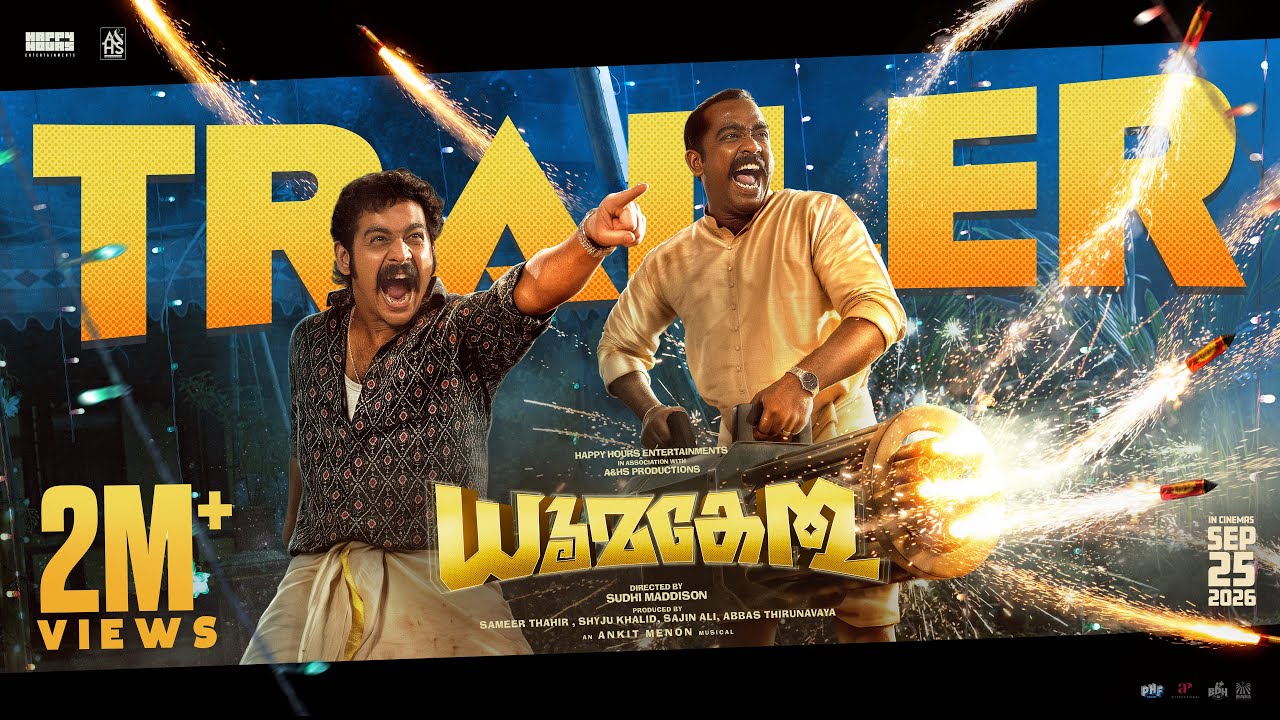
The Malayalam film industry has always been a fertile ground for high-concept storytelling wrapped in the accessible garb of mainstream entertainment. In 2026, that tradition continues with the release of Dhoomakethu, a film whose very title evokes the cosmic and the catastrophic in equal measure. Translating to “Comet,” the film arrives in theatres on September 25, 2026, carrying the weight of a highly unusual premise: a time-loop comedy set against the backdrop of a traditional Kerala wedding, punctuated by a celestial event that occurs only once every 3,000 years.
The cultural context here is rich and layered. Kerala’s wedding traditions are not merely ceremonies; they are elaborate, multi-day social theatres where family hierarchies, community gossip, and unspoken judgments play out under the guise of celebration. By grafting a sci-fi narrative device—the temporal loop—onto this deeply rooted cultural milieu, director Sudhi Maddison and writers Sonny and Manu attempt to create something that feels simultaneously novel and intimately familiar.
The buzz surrounding the film has been steadily building, driven largely by the presence of Sajin Gopu in his first full-fledged lead role after a series of memorable supporting turns. The teaser and promotional material have leaned heavily into the film’s quirky tone, showcasing a chaotic wedding setting where the protagonist, Kuttan, finds himself reliving the same day repeatedly.
The cultural conversation around the film has also tapped into something deeper: the social anxiety surrounding marriage, physical appearance, and the cruel economics of desirability in small-town India. Dhoomakethu uses its genre trappings not just for laughs but to explore the psychological toll of being judged by a community that claims to celebrate you.
The passage of the eponymous comet, established as a disruptive celestial force, serves as a symbolic backdrop to the internal disruptions of its protagonist’s life. The film’s release strategy, positioning it as a family-friendly comedy with a genre twist, suggests that the makers are aiming for a broad theatrical audience while retaining the experimental spirit that has come to define the more interesting corners of contemporary Malayalam cinema.
The pre-release metrics indicate a promising, if not explosive, trajectory. The theatrical buzz index sits at 72, reflecting strong curiosity among urban multiplex audiences and the youth demographic, though the niche conceptual framework has tempered expectations in the mass single-screen circuits. The advance booking trends, which commenced ahead of the worldwide release, show concentrated interest in major Kerala centres and tier-1 urban markets, where the novelty of a time-loop narrative is viewed as a selling point rather than a deterrent.
The film’s certification as UA with a runtime of 2 hours and 2 minutes positions it as a compact, tightly paced theatrical experience, avoiding the bloat that often plagues contemporary Indian comedies. As the industry watches to see whether this high-concept gamble pays off, the initial critical response has been mixed, praising the performances and the first half’s madcap energy while questioning the longevity of its narrative inventions.
What follows is a comprehensive deep-dive into every facet of Dhoomakethu, from its narrative architecture and technical execution to its commercial viability and target demographic positioning.
Quick Look HDHub4u Aaram Movie 2026 | Release Status, Screen Counts, Theatrical Run & Buzz
The Creative Team Behind the Chaos
Visual Grandeur and Cinematographic Language
Jinto George’s cinematography in Dhoomakethu is a study in contrasts, balancing the warm, intimate textures of a Kerala wedding with the darker, more ominous tones of the film’s violent interruptions and existential repetitions. The wedding setting provides a palette of rich reds, golds, and earthy browns, with the traditional pandal and the bustling preparations rendered in vibrant, almost documentary-style detail.
George’s camera moves fluidly through the crowded spaces of the wedding house, capturing the chaotic energy of relatives arguing over seating arrangements, the quiet moments of introspection as Kuttan stares at his own reflection, and the whispered gossip exchanged in the corridors. The visual grammar subtly reinforces the theme of voyeurism; the audience is frequently positioned as an observer, watching Kuttan being watched by a community that has already formed its judgments about him.
The use of natural light during the daytime wedding sequences contrasts sharply with the shadowy, expressionistic lighting of the night-time attack scenes, creating a visual dichotomy that mirrors the protagonist’s oscillation between hope and dread.
The film’s production design, handled by Ouseph John, deserves particular praise for its attention to the specificities of a traditional Kerala wedding. Every element, from the floral decorations to the brass lamps to the banana-leaf feast, is rendered with authenticity, grounding the more fantastical elements of the time loop in a tactile, believable reality.
This grounding is crucial: the audience must believe in the normality of the wedding day for the repetition to feel genuinely unsettling. The editing by Vivek Harshan is another technical highlight, particularly in the first half, where he uses match cuts and rhythmic transitions to convey the disorienting experience of reliving the same events.
The repetition of certain lines of dialogue, the recurrence of specific visual motifs, and the subtle variations introduced with each loop create a puzzle-like structure that rewards attentive viewing. The film’s sound design, with Dolby Atmos audio confirmed via audiographer Ranganath Ravee, adds another layer of immersion, particularly during the comet sequences where the audio shifts into deep, rumbling frequencies that suggest a cosmic presence far beyond the petty concerns of the wedding guests.
Ankit Menon’s musical score is eclectic, ranging from the traditional nadaswaram and percussion of the wedding to the more contemporary, propulsive background score that accompanies the action sequences. The notable track “Chiranjeevi,” with vocals by Malayali Monkeys and lyrics by Vinayak Sasikumar, has already garnered attention for its energetic, genre-blending sound, blending folk influences with modern production techniques.
In Focus Dont Trouble The Trouble Movie 2026 HDHub4u bi | Release Status, Screen Counts, Theatrical Run & Buzz
The music functions not merely as accompaniment but as a narrative device, with recurring themes associated with specific characters and situations. The stunts by Steven Kumar are staged with a mix of physical comedy and genuine tension, particularly during the masked attack sequences, which are choreographed to feel both threatening and slightly surreal.
The action escalates in the final act, delivering a visually bigger showdown that restores the madcap energy of the first half, though the resolution of the mystery ultimately proves more functional than profound.
Target Demographic and Estimated Screen Count
The target demographic for Dhoomakethu is a fascinating study in the evolving tastes of the Indian theatrical audience. On the surface, the film appears tailor-made for the mass single-screen centres of Kerala, with its wedding setting, family dynamics, and slapstick elements designed to appeal to a broad audience. However, the time-loop narrative device is a double-edged sword: it attracts the youth demographic and urban multiplex audiences who are familiar with and receptive to high-concept genre storytelling, but it risks alienating the more traditional viewers who might find the repetition confusing or the sci-fi elements alienating.
The film’s performance in the opening weekend will be crucial in determining whether it can bridge this divide. The urban multiplex response has reportedly been stronger, with the quirky humour and the puzzle-box structure of the narrative finding favour among younger viewers who enjoy dissecting the mechanics of the loop.
The estimated screen count required for theatrical breakeven is a critical metric that the trade is watching closely. Given the likely budget—which, while officially unconfirmed, appears to be in the mid-range for a Malayalam film with a known lead actor and a genre concept—the film would need to secure approximately 350 to 450 screens across Kerala to achieve a sustainable theatrical run.
This estimate assumes a mix of multiplex and single-screen bookings, with the first-week occupancy needing to be strong enough to justify retaining screens into the second week. The footfall target of approximately 15 to 20 lakh admissions is based on the assumption of a mid-range production budget combined with marketing costs and theatre rental structures.
The film’s ability to achieve these numbers will depend heavily on word-of-mouth, particularly in the mass centres where the niche concept may require more aggressive marketing to overcome initial hesitancy. The GCC markets, with their significant Malayali diaspora, represent a crucial tertiary circuit, where the film’s family-friendly themes and recognisable cast could drive healthy footfalls during the release window.
Top Story Chiram Movie 2026 HDHub4u bi | Release Status, Screen Counts, Theatrical Run & Buzz
The demographic dichotomy also has implications for the film’s marketing strategy. The promotional material has wisely highlighted the comedic elements and the wedding setting, positioning the film as a family entertainer with a twist, rather than as a hard sci-fi or philosophy-driven narrative. This is a smart move, as it lowers the barrier to entry for audiences who might be intimidated by a time-loop concept.
The presence of Sajin Gopu, who has built a reputation as a reliable comedic performer in supporting roles, is a significant draw for the mass audience, while Nikhila Vimal brings a certain critical credibility and appeal to the more discerning viewers. The supporting cast, including the always-reliable Shine Tom Chacko and the memorable Manju Pillai, adds depth and familiarity to the film’s ensemble, ensuring that even if the central concept doesn’t fully engage every viewer, the performances provide a reason to invest in the theatrical experience.
Commercial Economics and Box Office Breakdown
The commercial economics of Dhoomakethu are, at the time of writing, shrouded in the kind of speculation that accompanies any mid-budget Malayalam release with a high-concept premise. The absence of confirmed box office figures for the opening day and weekend is not unusual, particularly for a film that is positioning itself as a word-of-mouth-driven entertainer rather than a front-loaded event release.
However, the trade’s interest in the film’s performance is significant, as it represents a test case for whether time-loop comedies can find a sustainable audience in the Malayalam market. The film’s budget, while officially unconfirmed, is reportedly in the range that would necessitate a theatrical gross of approximately 15 to 20 crore rupees to break even, factoring in the standard revenue splits between exhibitors, distributors, and producers.
This is an achievable target for a well-received Malayalam film with a known lead, but it is by no means guaranteed, especially given the niche conceptual framework.
The revenue model for Dhoomakethu will likely follow the standard trajectory for a Malayalam theatrical release: a strong opening weekend driven by fans of the lead actor and the novelty of the concept, followed by a crucial first week where word-of-mouth either sustains or sinks the film. The second weekend is often the tell-all for films of this nature; if the film can maintain occupancy above a certain threshold, it can secure a stable screen count into the third week and beyond.
The film’s performance in the multiplexes of Kochi, Thiruvananthapuram, and Kozhikode will be closely monitored, as these markets are more receptive to genre experimentation and tend to drive the critical narrative around a film’s success. The mass single-screen centres, while crucial for volume, are more volatile; a film that doesn’t immediately click with this audience can lose screens rapidly.
Recommended Neekkam Movie 2026 HDHub4u bi | Release Status, Screen Counts, Theatrical Run & Buzz
The overseas market, particularly the GCC, represents a significant supplementary revenue stream, with the diaspora’s appetite for Malayalam films remaining robust throughout the year.
The OTT and satellite rights market for Malayalam cinema has evolved significantly in recent years, with streaming platforms aggressively acquiring content to bolster their regional libraries. For a film like Dhoomakethu, with its high-concept premise and recognisable cast, the digital rights are likely to be a substantial component of the overall revenue pie.
The film’s ability to secure a favourable OTT deal will depend on its theatrical performance; a successful run increases the perceived value of the digital rights, while a lacklustre performance may see the producers accepting a lower price to recoup their investment. The satellite rights, typically sold to a major Malayalam television network, provide another revenue stream, though the valuation for a UA-certified comedy with a niche concept may be moderate.
The film’s music rights, particularly the catchy “Chiranjeevi” track, also contribute to the overall revenue, with streaming platforms and YouTube generating ancillary income through views and downloads.
Critic and Trade Consensus
The critical reception to Dhoomakethu has been mixed, reflecting the film’s ambitious but uneven execution of its high-concept premise. The Times of India awarded the film a rating of 2.5 out of 5, praising Sajin Gopu’s energetic comedic performance and Ganapathi’s surprising transformation into a small-town youth, but critiquing the script for becoming “staid in the second half.” The review noted that the film missed an opportunity to use the time-loop device to address the body-shaming and age-related ridicule directed at Kuttan, observing that while the time-loop concept is novel for Malayalam cinema, the conflict feels somewhat clichéd and the rare comet’s narrative purpose remains unresolved.
This critique points to a broader issue: the film’s reluctance to fully commit to the thematic implications of its premise, opting instead for a more conventional investigative turn in the second half that dilutes the madcap energy of the first. For the trade, this is a concern, as the second half’s shift in tone may limit repeat viewings, which are crucial for a film of this nature to achieve a long theatrical run.
Cinema Express offered a more favourable assessment, awarding the film 3 out of 5 and calling the first half “the stronger half by some distance.” The reviewer praised how the repetition transforms mundane wedding elements into a puzzle for the audience to solve alongside Kuttan, highlighting the film’s inventive use of the time-loop device to create a participatory viewing experience.
Trade Alert Udumbanchola Movie 2026 HDHub4u bi | Release Status, Screen Counts, Theatrical Run & Buzz
Manju Pillai’s memorable performance as Kuttan’s mother and Ganapathi’s reliably good work near the climax were singled out for praise, while the second hour’s investigative turn was noted as causing the energy to dip. The social commentary was described as “a bit heavy-handed” in the second half, though most humour still arises organically from situations.
This review captures the film’s central tension: it is at its best when it embraces the absurdity of its premise and allows the comedy to emerge from the characters’ reactions to the repetition, but it falters when it attempts to impose a more conventional narrative structure on the chaos.
The audience word-of-mouth patterns indicate stronger engagement in multiplex and urban centres receptive to genre experimentation, with the film’s quirky humour and time-loop novelty finding favour among younger viewers. Mass single-screen centres and B/C tier audiences responded more moderately, with the second half’s shift toward conventional investigation and action reportedly diluting the madcap energy that characterized the first half’s appeal.
The wedding setting and family dynamics provided relatability across demographics, though the niche concept limited broader mass appeal compared to the lead actor’s prior commercial outings. The trade consensus, therefore, is that Dhoomakethu is a film with a strong first half, a weaker second half, and a concept that is both its greatest asset and its greatest limitation.
Its success will depend on whether the positive elements—the performances, the humour, the novelty—can outweigh the narrative missteps in the minds of the paying audience.
Frequently Asked Questions
What is the plot of Dhoomakethu (2026)?
Dhoomakethu follows Lathin Kumar, known as Kuttan, a 36-year-old man who has endured years of social ridicule regarding his appearance and marital prospects. On his wedding day to the beautiful Sharmila, a rare comet passes Earth, and Kuttan is murdered by masked assailants on his wedding night. He awakens on the morning of his wedding day, trapped in a time loop, forced to relive the same day repeatedly.
The film blends time-loop comedy with fantasy and action, set against a traditional Kerala wedding backdrop.
Featured Titans Movie 2026 HDHub4u bi | Release Status, Screen Counts, Theatrical Run & Buzz
Who are the main actors in Dhoomakethu?
The film stars Sajin Gopu as Lathin Kumar (Kuttan) and Nikhila Vimal as Sharmila. The supporting cast includes Ganapathi as Anti, Shine Tom Chacko, Siddharth Bharathan, Manju Pillai as Kuttan’s mother, and Niyas Backer. The film is directed by Sudhi Maddison, with a screenplay by Sonny and Manu.
Is Dhoomakethu a remake of a foreign film?
No, Dhoomakethu is an original Malayalam film. While the time-loop concept has been explored in international cinema (such as Groundhog Day and Palm Springs), this film presents a unique cultural adaptation set within the specific milieu of a traditional Kerala wedding, incorporating local superstitions about the rare comet and the social dynamics of small-town communities.
What is the runtime and censor rating of Dhoomakethu?
The film has a runtime of 2 hours and 2 minutes and is certified UA by the Central Board of Film Certification. The UA rating indicates that the film is suitable for unrestricted public exhibition, though parental guidance is advised for children under 12. The film contains comedic violence and thematic elements related to social judgment and body shaming.
Is Dhoomakethu available on OTT platforms?
As of the film’s theatrical release on September 25, 2026, the official streaming partner and satellite channel for Dhoomakethu have not been confirmed. Typically, Malayalam films arrive on OTT platforms 30 to 45 days after their theatrical release, depending on the terms of the digital rights agreement. Viewers are advised to check official announcements from the production house for updates on the streaming release.
What is the box office performance of Dhoomakethu?
Specific box office figures for Dhoomakethu, including Day 1 collections, opening weekend totals, and lifetime India net collections, are officially not confirmed at the time of writing. The film’s commercial performance will depend on word-of-mouth, particularly in the mass single-screen centres, where the niche time-loop concept may require more time to gain traction.
The trade is closely monitoring the film’s performance in multiplex and urban centres, where the response has been more favourable.
Data Attribution Registry
- Mathrubhumi English: “Dhoomakethu release date revealed: Sajin Gopu, Nikhila Vimal film set for September 25” – https://english.mathrubhumi.com/movies-music/news/dhoomakethu-movie-release-date-september-25-sajin-gopu-nikhila-vimal-qlpdlmhg
- Cinema Express: “Dhoomakethu Movie Review: A time-loop comedy that’s more fun than inventive” – https://www.cinemaexpress.com/malayalam/review/2026/Sep/25/dhoomakethu-movie-review-a-time-loop-comedy-thats-more-fun-than-inventive
- The Times of India: “Dhoomakethu Movie Review: A novel concept stuck in a staid story” – https://timesofindia.indiatimes.com/entertainment/malayalam/movie-reviews/dhoomakethu/movie-review/134489357.cms
HDHub4u Media Integrity
The cinematic data, buzz metrics, and box office forecasts published above have been curated independently by our editorial team. We firmly support the theatrical industry and do not host or encourage unauthorized media downloads.
Compliance Statement: This article is an informational review of Dhoomakethu Movie 2026 HDHub4u bi | Release Status, Screen Counts, Theatrical Run & Buzz and does not host or link to unauthorized media files.