Samavarthi (2026) Telugu Movie Review: Satyadev’s Wildest Ecological Action Thriller – Teaser Breakdown, Budget, Screen Count & Box Office Prediction
Cinema Hook & Cultural Context
In the long and storied history of Indian cinema, the forest has rarely been merely a backdrop. From the mythological forests of the Ramayana to the poetic wilderness of Vanaprastham, the jungle has always functioned as a moral testing ground—a place where civilization strips away its pretensions and humanity confronts its most primal self.
With Samavarthi, director Ajay Nag V appears to be attempting something remarkably ambitious for the Telugu film industry: a full-scale ecological action thriller that treats the forest not as a setting but as a living, breathing protagonist with its own agenda, its own memory, and its own capacity for vengeance. The title itself—roughly translatable as “the great harvest” or “the cyclical reckoning”—carries a distinctly philosophical weight, suggesting that nature’s retribution is not random violence but an inevitable consequence of human transgression.
The timing of this project could not be more culturally resonant. In 2026, India finds itself in the midst of an escalating national conversation about environmental destruction, tribal land rights, and the human cost of unchecked industrialization. The Polavaram displacement controversies, the ongoing struggles of Adivasi communities across the Telangana–Chhattisgarh corridor, and the global climate crisis have created an audience that is primed for narratives that engage with these anxieties.
What makes Samavarthi particularly intriguing is its decision to channel these concerns through the framework of a mass-market action vehicle rather than a sober documentary or art-house drama. This is a film that wants to be both a crowd-pleasing Satyadev spectacle and a genuinely thoughtful meditation on man’s relationship with the natural world—a balancing act that has sunk many ambitious projects but which, if successful, could redefine the boundaries of what Telugu commercial cinema is permitted to attempt.
The film’s positioning within the broader Telugu industry ecosystem is equally fascinating. Satyadev Kancharana has spent the past several years building a reputation as one of the most interesting actors in Telugu cinema—a performer who alternates between quirky indie-inflected comedies like Brochevarevarura and gritty crime dramas like Krishna and His Leela, while occasionally flirting with mainstream glory in films like Thimmarusu.
Samavarthi represents his most significant gamble yet: a full-fledged mass-action avatar that requires him to go toe-to-toe with both human antagonists and a tiger, all while anchoring a story that demands emotional depth and physical transformation. The teaser’s decision to showcase dialogue in the Telangana dialect is a deliberate and savvy move, signaling to the crucial mass single-screen centers of the Telangana region that this is a film that speaks their language—literally and figuratively.
In an era where star-driven cinema increasingly reaches for pan-Indian homogeneity, Samavarthi‘s embrace of regional specificity feels like a bold, confident choice.
Table 1: Main Cast & Crew
Analysis: Visual Grandeur & Cinematography
The decision to shoot Samavarthi across seven distinct forests in South India and forty-two unexplored locations is the kind of production choice that immediately separates a film from the standard Telugu action template. Most commercial Indian films treat the forest as a convenience—a generic green screen backdrop populated by stock footage of trees and the occasional obviously inserted animal.
The commitment to on-location shooting in genuinely remote and difficult terrain suggests a production philosophy that prioritizes authenticity and immersion over the ease of studio control. This approach carries enormous logistical challenges: moving cast and crew through dense jungle, managing unpredictable weather, and capturing the kind of natural light that makes a forest feel alive rather than merely lit.
Quick Look Maya Lady Movie 2026 HDHub4u bi | Release Status, Screen Counts, Theatrical Run & Buzz
But the payoff, when executed well, is a visual texture that cannot be faked—a sense of place that permeates every frame and lends the narrative an almost documentary credibility.
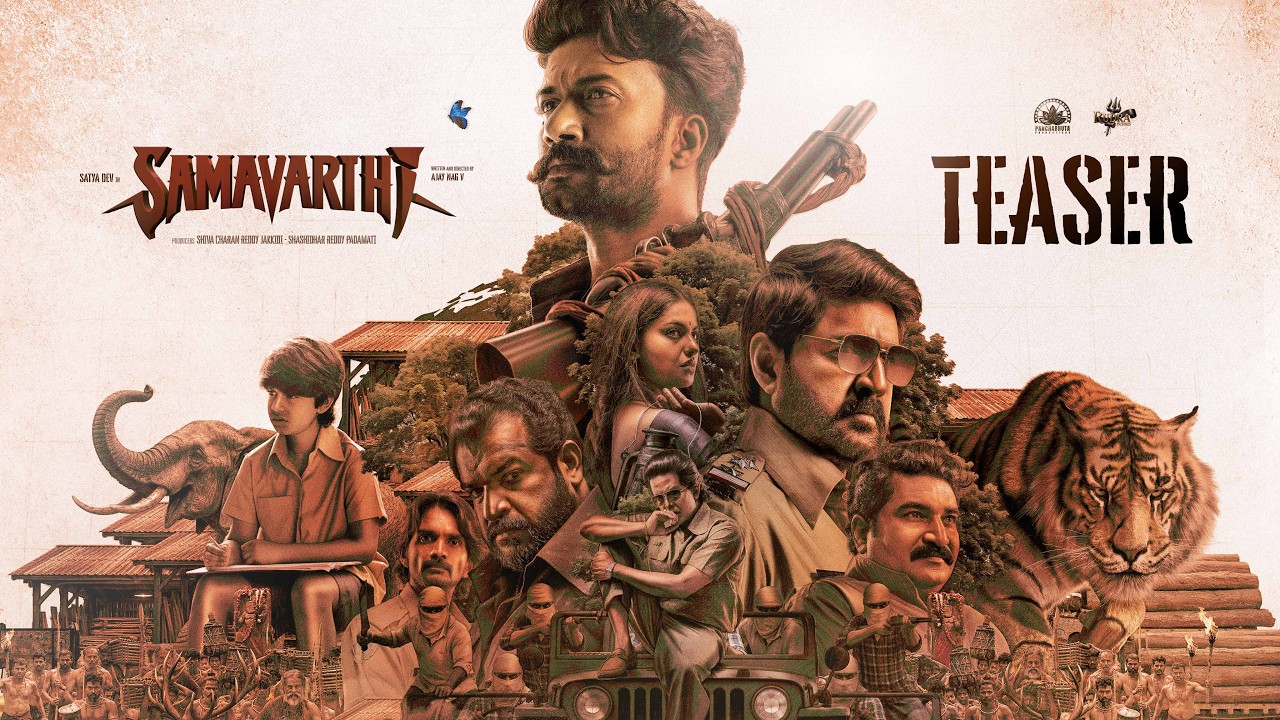
Cinematographers Harsha Mallikarjun and Dev Deep Gandikundu have been singled out by early trade viewers for their work on the teaser, and it is easy to understand why. The promotional material suggests a visual grammar that oscillates between two extremes: moments of breathtaking, almost spiritual beauty—sunlight filtering through canopy, mist rising from forest floors, the intricate textures of bark and leaf—and sequences of visceral, claustrophobic intensity, where the camera becomes a participant in the hunt rather than merely an observer.
This duality is crucial to the film’s thematic ambitions. If the forest is to function as both a paradise worth protecting and a terrifying force capable of horrifying violence, the cinematography must be able to shift registers seamlessly, making us feel both the allure and the danger of the wilderness. The teaser’s most striking images reportedly exploit this tension, framing Mahadev as a small figure against an overwhelming natural world even as he asserts his dominance over it.
The production design by Ullas Hydoor and art direction by Mondru Ravikumar will be equally critical in establishing the film’s world. Unlike urban action thrillers, where the environment is largely pre-existing, Samavarthi requires the creation of an entire tribal ecosystem—dwellings, ritual spaces, tools, clothing, and the thousand small details that make a community feel lived-in rather than designed.
The film’s success depends on its ability to convince us that this forest and its people have existed for generations, that their way of life is organic rather than imposed by a screenwriter. If the production team can achieve this level of authenticity while maintaining the visual spectacle that Telugu mass cinema audiences expect, Samavarthi could set a new benchmark for how environmental themes are rendered on screen.
The integration of the tiger—whether through trained animals, animatronics, or CGI—will be the ultimate test. Indian cinema has historically struggled with convincing animal effects, and the film’s credibility hinges on making this predator feel genuinely threatening rather than merely simulated.
The musical contribution of Sinjith Yerramilli deserves particular attention, as the background score has been identified by trade critics as one of the teaser’s strongest elements. In an ecological thriller where much of the tension derives from silence and the ambient sounds of the forest, the score must know when to recede and when to surge.
In Focus Scene Telugu Movie 2026 HDHub4u bi | Release Status, Screen Counts, Theatrical Run & Buzz
The differential between the film’s quieter, more contemplative moments and its action set-pieces will depend heavily on Yerramilli’s ability to modulate tone without resorting to the bombastic clichés that often plague Telugu action cinema. If the teaser’s use of music is any indication—reportedly blending tribal percussion with more conventional orchestral elements—the composer appears to have understood that the most effective way to score a film about nature is to let the natural world provide much of the soundtrack, with music serving as enhancement rather than replacement.
Table 2: Target Demographic & Screen Count Estimation
Commercial Economics & Box Office Breakdown
The financial architecture of Samavarthi presents a classic case study in the risks of ambitious mid-budget Telugu cinema. With a reported total investment of Rs. 20 crore—including production costs of approximately Rs. 18 crore plus marketing and interest overheads—the film is positioned in a challenging middle ground.
It is too expensive to be considered a small, risk-tolerant experimental project, yet it lacks the star power and pre-sold franchise appeal that would guarantee the opening weekend numbers necessary to recoup such an investment comfortably. The film’s commercial fate will be determined by a complex equation involving Satyadev’s market ceiling, the appeal of the ecological thriller genre, the effectiveness of the marketing campaign, and the crucial non-theatrical revenue streams that have become increasingly vital to Telugu cinema’s economic viability.
The digital rights situation is particularly instructive. Trade sources indicate that non-theatrical rights—including OTT and satellite—are expected to yield approximately Rs. 10-12 crore, a figure that would cover more than half the film’s total cost if realized. However, the same sources note that OTT bidding is currently under pressure, largely because Satyadev’s previous release, Rao Bahadur (2026), failed to deliver expected commercial returns despite receiving critical appreciation.
This pattern—where content-driven films earn praise but struggle at the box office—has become something of a recurring theme in Satyadev’s career, and it creates a perception problem that Samavarthi must overcome. Streaming platforms, increasingly focused on subscriber acquisition and retention metrics rather than pure content acquisition, are becoming more discriminating about which films justify premium prices.
If Samavarthi can deliver a genuinely distinctive theatrical experience—the kind of film that generates conversation and cultural buzz—the OTT valuation could improve significantly. If it is perceived as merely another action film in a crowded marketplace, the digital deals may remain modest.
The theatrical breakeven math is unforgiving. To recover a Rs. 20 crore investment purely through theatrical revenue, the film would need to generate approximately Rs. 35-40 crore in gross collections, assuming standard distributor-exhibitor splits. This translates to roughly 12-15 lakh admissions across all languages and territories—a significant ask for a film without a established mass-market star.
Top Story Thellakaagitham Movie 2026 HDHub4u bi | Release Status, Screen Counts, Theatrical Run & Buzz
The Telangana region, with its demonstrated appetite for films that authentically represent its dialect and culture, will be the most crucial territory. If Samavarthi can capture the mass single-screen audience in cities like Warangal, Karimnagar, and Nizamabad—theatres where Satyadev’s urban-oriented films have historically underperformed—it could build the kind of word-of-mouth momentum that transcends its modest opening.
Conversely, if the film skews too heavily toward multiplex audiences and fails to connect with the mass belts, it risks the same fate as many well-intentioned but commercially underwhelming Telugu films before it.
The release date uncertainty adds another layer of complexity. The reported dates of September 18, 2026 and November 27, 2026 suggest a production still navigating post-production challenges or awaiting optimal market conditions. In the Telugu film calendar, release date positioning is often as important as the film itself—a clash with a major star vehicle can devastate a mid-budget film’s screen count and audience share.
If Samavarthi releases during a relatively clear window, it could maximize its theatrical footprint and give the film room to build word-of-mouth over multiple weeks. If it is forced to compete directly with a Sankranthi or summer tentpole release, even a superior film can be crushed by the sheer weight of star-driven marketing and audience loyalty.
The producers’ eventual decision on release timing will be a strong indicator of their confidence in the film’s commercial prospects.
Critic & Trade Consensus
The early critical response to Samavarthi‘s teaser has been notably positive, with trade reviewers highlighting several elements that suggest genuine artistic ambition beneath the mass-market surface. Satyadev’s physical transformation—described by multiple outlets as a “wildest avatar”—has been widely praised, with particular emphasis on the actor’s willingness to embrace a rugged, battle-hardened physicality that departs significantly from his earlier, more urban screen persona.
The effective use of the Telangana dialect has also received attention, with critics noting that the dialogue feels organic rather than performative, grounding the character in a specific cultural milieu while still delivering the mass-appeal punchlines that action audiences expect. The decision to feature a “tiger versus Mahadev” dynamic has been identified as a smart marketing hook, one that positions the film as both a creature feature and a human drama.
Recommended Adarsha Kutumbam Movie 2026 HDHub4u bi | Release Status, Screen Counts, Theatrical Run & Buzz
However, a note of caution runs through even the most enthusiastic early assessments. Several trade analysts have pointed to what might be called the “Satyadev paradox”—the persistent gap between the actor’s critical credibility and his commercial performance. Films like Brochevarevarura and Krishna and His Leela earned strong reviews and developed devoted followings, but failed to translate that goodwill into the kind of box office numbers that would elevate Satyadev to the tier of actors who can reliably open a film.
Rao Bahadur, his most recent release, reportedly underperformed despite critical appreciation, a result that has made exhibitors and distributors more cautious about betting on his solo-starring vehicles. The question that hangs over Samavarthi is whether the ecological thriller format—with its built-in spectacle, its universal themes, and its potential appeal beyond Satyadev’s existing fanbase—can break this pattern.
The positive teaser response suggests the potential is there. Whether the full film delivers on that potential remains the critical unknown.
The broader industry context also shapes how Samavarthi is being evaluated. Telugu cinema in 2026 is a landscape defined by extremes: massive pan-Indian spectacles that dominate national conversation, and smaller, more personal films that struggle for screens and attention. The mid-budget action film—the Rs. 15-30 crore range that once produced reliable hits—has become an endangered species, squeezed by rising production costs, changing audience habits, and the consolidation of theatrical exhibition.
If Samavarthi succeeds, it could demonstrate that this middle ground remains viable, that audiences will turn out for original, well-executed genre films that offer something different from both the mega-budget spectacles and the micro-budget experiments. If it fails, it will be cited as further evidence that only the extremes can survive.
The stakes, in other words, extend well beyond the film’s own bottom line. The trade is watching closely, and the industry’s understanding of what is commercially possible in Telugu cinema may well be shaped by how Samavarthi performs.
Frequently Asked Questions
When is Samavarthi releasing in theatres?
Samavarthi is officially scheduled for a theatrical release on September 18, 2026, though an alternate reported date of November 27, 2026 has also been circulating in trade circles. The multiple dates suggest that the production is still finalizing its post-production schedule and release strategy, potentially waiting for an optimal window that avoids competition from major star vehicles.
Trade Alert HDHub4u Slum Dog 33 Temple Road Movie 2026 | Release Status, Screen Counts, Theatrical Run & Buzz
Given the Telugu film industry’s tendency to adjust release dates based on market conditions, audiences should expect confirmation of the final date closer to the actual release window. The film has been certified U/A by the Central Board of Film Certification, indicating that it contains thematic elements—likely action violence and intense sequences—that require parental guidance for younger viewers.
What is the story of Samavarthi?
Samavarthi is an ecological action thriller set against the backdrop of a dense forest and its indigenous tribal community. The narrative follows Mahadev (Satyadev Kancharana), a fierce protector who rises to defend the forest and its people when a series of brutal attacks—ostensibly by a man-eating tiger—plunges the community into terror.
The central mystery involves whether the predator is truly an animal or whether humans are committing atrocities under the guise of a beast, adding layers of suspense to what might otherwise be a straightforward survival thriller. The film explores themes of deforestation, wildlife poaching, tribal displacement, and the violent collision between human greed and the untamed forces of nature.
The protagonist’s name—Mahadev, meaning “great god”—suggests a mythological dimension to his role as a guardian archetype who descends to restore balance.
Who is the director of Samavarthi and what other films has he made?
Samavarthi is directed by Ajay Nag V, who also serves as the film’s screenwriter. While comprehensive details about his previous filmography are not widely available in mainstream trade sources, his selection to helm a project of this scale and ambition suggests a director with the vision and technical capability to handle complex, effects-heavy production.
The involvement of experienced technicians like cinematographers Harsha Mallikarjun and Dev Deep Gandikundu, production designer Ullas Hydoor, and editor Aditya Tiwari indicates a production team assembled with an eye toward both visual spectacle and narrative coherence. Ajay Nag V’s ability to balance the film’s mass-market action requirements with its ecological and emotional themes will be the primary directorial challenge, and his success or failure in achieving this balance will likely determine both the film’s critical reception and its commercial performance.
What is the budget of Samavarthi and how much does it need to earn to be profitable?
Samavarthi has an estimated production and marketing budget of Rs. 20 crore, including promotions and interest costs, with the production cost alone reported at approximately Rs. 18 crore. To achieve theatrical profitability, the film would need to generate approximately Rs. 35-40 crore in gross collections, translating to roughly 12-15 lakh admissions across all markets.
Featured HDHub4u Itlu Arjuna Movie 2026 | Release Status, Screen Counts, Theatrical Run & Buzz
However, the film’s economics are more complex than purely theatrical revenues. Non-theatrical rights—including OTT streaming and satellite television—are expected to yield approximately Rs. 10-12 crore, which would cover more than half the total investment if realized. This means the film’s theatrical performance needs to cover a net deficit of roughly Rs.
8-10 crore, a more achievable target that still requires strong performance in mass markets and sustained word-of-mouth momentum. The digital rights bidding process has reportedly been under pressure due to Satyadev’s prior release Rao Bahadur underperforming commercially, making the theatrical box office crucial for overall profitability.
How many screens will Samavarthi release on?
Official screen count for Samavarthi has not been confirmed, but trade estimates suggest the film will aim for approximately 1,200-1,500 screens across India and 300-400 screens in overseas markets, for a worldwide total of roughly 1,500-1,900 screens. This would represent a wide release typical for a mid-budget Telugu film with pan-regional ambitions.
The crucial factor will be screen allocation in the Telangana region, particularly in mass single-screen centers where the film’s Telangana dialect and rural setting may resonate most strongly. The final screen count will depend on the release date—a less competitive window would allow for a wider release and more sustained theatrical run—and on the confidence of exhibitors in the film’s commercial prospects.
If early word-of-mouth is strong, screen count could expand after the opening weekend as exhibitors reallocate screens from underperforming competitors.
Is Samavarthi based on a true story or real events?
While Samavarthi is not officially described as based on a specific true story, its narrative draws heavily on real-world conflicts between indigenous communities, forest conservation efforts, and corporate or criminal encroachment on natural resources. The film’s focus on man-eating tiger attacks echoes actual incidents that have occurred in various forest regions of India, where loss of habitat and human-wildlife conflict have created genuinely dangerous situations.
The theme of illegal poaching and deforestation threatening tribal ways of life reflects ongoing social and environmental struggles across Telangana, Chhattisgarh, Odisha, and other forested regions of India. The film’s use of the Telangana dialect and its emphasis on authentic forest locations shot across seven South Indian forests and forty-two unexplored locations suggest a commitment to capturing the specificity of this world.
Rather than being a documentary retelling of a single event, Samavarthi appears to synthesize multiple real-world concerns—ecological destruction, tribal displacement, human-wildlife conflict, and the moral ambiguity of who the true “predator” is—into a fictional narrative designed to entertain while provoking thought about pressing environmental issues.
Data Attribution Registry
- CineJosh: Satyadev’s upcoming ecological action thriller Samavarthi is set to unveil its official teaser on September 19, 2026 – https://cinejosh.com/news/1/129986/satyadev-samavarthi-teaser-date-announced.html
- Tupaki English: Satyadev’s Unique Stories Are Not Enough? – https://english.tupaki.com/amp/entertainment/satyadev-samavarthi-box-office-test-1507006
- GreatAndhra: Samavarthi Teaser Unleashes Satyadev’s Wildest Avatar Yet – https://www.greatandhra.com/movies/movie-news/samavarthi-teaser-unleashes-satyadevs-wildest-avatar-yet/
HDHub4u Media Integrity
The cinematic data, buzz metrics, and box office forecasts published above have been curated independently by our editorial team. We firmly support the theatrical industry and do not host or encourage unauthorized media downloads.
Compliance Statement: This article is an informational review of Samavarthi Movie 2026 HDHub4u bi | Release Status, Screen Counts, Theatrical Run & Buzz and does not host or link to unauthorized media files.