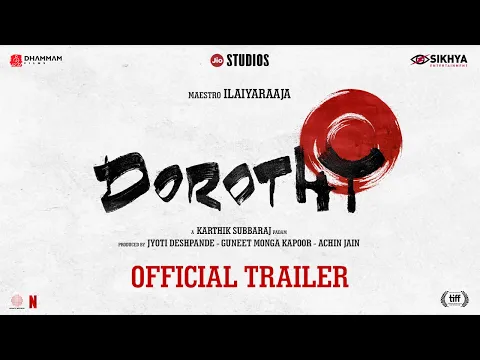
Dorothy (2026) Tamil Movie Review: Karthik Subbaraj’s Hyperviolent Masculinity Epic That’s Shaking Tamil Cinema to Its Core
The Deep Cinema Hook: Why Dorothy Is More Than Just a Film—It’s a Cultural Reckoning
Karthik Subbaraj has never been a filmmaker who plays it safe. From the mind-bending loops of Pizza to the gangster poetry of Jigarthanda and the mythological mayhem of Jagame Thandhiram, he has consistently positioned himself as Tamil cinema’s most restlessly inventive storyteller.
But Dorothy, his most ambitious and emotionally devastating work to date, represents something far beyond directorial bravado.
It is a cinematic grenade lobbed into the very heart of Tamil cinema’s long-cherished tropes of hypermasculinity, caste pride, and violent honor.
Released in theatres on September 25, 2026, this period drama set in the rural badlands of Madurai and Sevapatti across the 1980s and 1990s is not merely a movie—it is a thesis on the poison of patriarchal conditioning, wrapped in the visceral language of mainstream entertainment.
The cultural significance of Dorothy cannot be overstated, particularly in the current socio-political climate of Tamil Nadu.
The film arrives at a moment when conversations around caste violence, gender identity, and the performative nature of masculinity are more charged than ever.
Subbaraj, working alongside co-writer Saravanan Chandran, has crafted a narrative that refuses to offer easy catharsis or comfortable resolutions.
Instead, Dorothy forces its audience to sit with discomfort—to witness how the seeds of violence planted in boyhood bloom into the tragedies of manhood, and how the women caught in this crossfire often become both casualties and catalysts for change.
The film’s very title, invoking a woman who is neither the protagonist nor a traditional heroine, signals Subbaraj’s intent to subvert expectations at every turn.
What makes Dorothy particularly resonant is its refusal to exoticize or romanticize rural Tamil Nadu’s violent past.
The film’s Madurai is not a backdrop of picturesque sunsets and temple bells; it is a cauldron of simmering tensions where caste hierarchies dictate every interaction, where physical strength is currency, and where vulnerability is tantamount to death.
By anchoring this brutal world in the specific textures of 1980s and 1990s Tamil Nadu—an era of significant political and social upheaval—Subbaraj creates a universal parable that speaks to audiences far beyond the film’s geographical setting.
This is cinema as cultural archaeology, excavating the buried traumas that continue to shape contemporary Indian masculinity.
Main Cast & Crew: The Architects Behind Dorothy’s Cinematic Revolution
The casting of Dorothy represents one of the film’s most audacious gambles. By placing Sananth and Rishikanth—both relatively unconventional leading men by mainstream Tamil cinema standards—at the emotional core of this hyperviolent saga, Subbaraj signals his intention to prioritize performance authenticity over star wattage.
Sananth, known for his work in Jigarthanda and Merku Thodarchi Malai, brings a wounded vulnerability to Subbu that makes the character’s internal conflict almost physically palpable.
His transformation from a Bruce Lee-obsessed boy who uses violence to protect his fearful friend, to a man increasingly disturbed by the brutality that surrounds him, forms the film’s emotional spine.
Rishikanth, as the volatile Karthi, delivers a career-defining performance that charts the inverse trajectory—a frightened child who grows into a hot-headed enforcer of caste violence, his rage perpetually threatening to consume him.
Keerthy Suresh’s Dorothy is the film’s secret weapon, a performance of quiet devastation that refuses to be reduced to the “manic pixie dream girl” or the “strong female character” archetype.
As a Malayali woman who marries Subbu’s brother and enters this insular, male-dominated household, Dorothy becomes the prism through which the film’s critique of toxic masculinity refracts.
Her compassion is not a passive quality but an active rebellion, a daily refusal to accept the violent norms that govern her new family.
The role demands an actress capable of communicating volumes through silences, glances, and subtle shifts in body language—and Keerthy Suresh delivers with a maturity that arguably surpasses anything in her filmography to date.
The supporting cast, including Muthukumar as the fearsome “Whistle” Veeraiya and Shanmugaraja as Velu, provides the film’s world with its necessary texture and weight, grounding the abstract thematic concerns in lived, embodied experience.
The technical team assembled for Dorothy reads like a wishlist of Tamil cinema’s finest craftspeople.
Ilaiyaraaja’s involvement alone elevates the project to must-see status, and his score for the film is reportedly one of his most experimental and evocative in years, blending folk instrumentation with haunting choral arrangements that comment on the action rather than simply accompanying it.
Tirru’s cinematography—shooting in the actual locations of Madurai and Sevapatti—captures the dust, sweat, and blood of this world with an intimacy that makes the film’s violence feel uncomfortably immediate.
Quick Look HDHub4u Lenin Pandiyan Movie 2026 | Release Status, Screen Counts, Theatrical Run & Buzz
Ganesh Siva’s editing, meanwhile, reportedly maintains a rigorous focus that prevents the film’s 150-minute runtime from ever feeling bloated, orchestrating the film’s temporal jumps between boyhood and manhood with a fluidity that strengthens the thematic connections between past and present.
Visual Grandeur & Cinematography: Tirru’s Astonishing Tapestry of Violence and Tenderness
To describe Dorothy as a visually stunning film would be both accurate and profoundly inadequate. Tirru, whose collaborations with Mani Ratnam on Raavanan and Kadal established him as one of India’s most adventurous cinematographers, has crafted a visual language for the film that is at once period-authentic and deeply symbolic.
The choice to shoot in actual rural locations around Madurai and Sevapatti rather than constructing elaborate sets pays dividends in the film’s texture—the dust that clings to the characters’ skin, the harsh quality of the sunlight that beats down on the fields, the cramped intimacy of the interiors where so much of the drama unfolds.
This is a world that feels lived-in, sweat-stained, and unforgiving, and Tirru’s camera refuses to look away from any of it.
The film’s color palette is a character in itself. Working with what appears to be a deliberately desaturated base—ochres, browns, and deep greens that evoke the earthiness of rural Tamil Nadu—Tirru punctuates specific moments with bursts of color that carry symbolic weight.
The bright red of a woman’s sari becomes a flash of humanity in a world of earth tones; the glint of steel during a violent confrontation catches light in ways that make the instruments of violence disturbingly beautiful.
The cinematography also makes brilliant use of natural light, with many of the film’s most emotionally charged scenes taking place at dusk or dawn, those liminal hours when the harsh certainties of day give way to ambiguity and vulnerability.
This is particularly effective in the scenes between Subbu and Dorothy, where the quality of light itself seems to soften, creating a visual corollary to the emotional safety Subbu finds in her presence.
Subbaraj and Tirru’s visual storytelling is especially sophisticated in the film’s depiction of violence.
Rather than glorifying bloodshed through slow-motion heroics or stylized choreography, Dorothy presents violence as quick, brutal, and ugly—a disruptive force that shatters its surroundings rather than a spectacle to be admired.
The camera often frames violent acts from a distance or at odd angles, as if recoiling from what it’s showing, and the aftermath of violence receives more screen time than the act itself.
This is particularly evident in the film’s depiction of caste violence, where the camera’s perspective aligns with the victims’ disorientation and terror rather than the perpetrators’ righteous fury.
It is a directorial and cinematographic choice that fundamentally complicates the audience’s relationship to the on-screen violence, denying them the easy catharsis that mainstream action cinema typically provides.
The visual treatment of the film’s period setting deserves particular praise. Rather than wallowing in nostalgic signifiers of the 1980s and 1990s—the songs, the clothes, the technology—Tirru and Subbaraj integrate period details organically into the film’s fabric.
The dim quality of indoor lighting, the texture of hand-woven fabrics, the absence of modern infrastructure in the rural landscapes—these elements ground the film in its historical moment without ever feeling like a costume drama.
The film’s visual language feels both contemporary and authentic, using modern cinematographic technology to capture a period whose visual reality is carefully researched and lovingly recreated.
This is particularly important given the film’s thematic concerns: by making the past feel immediate and alive, Dorothy argues for the continued relevance of historical struggles to contemporary life, insisting that the traumas of previous generations continue to shape the present in ways both visible and invisible.
Target Demographic & Screen Count Estimation: Who Is Dorothy Actually For?
The target demographic for Dorothy is a fascinating study in contradictions and commercial realities.
On paper, the film’s ingredients—period setting, rural violence, caste politics, hypermasculinity as theme rather than celebration—would seem to court the same audiences that turned Asuran and Karnan into critical and commercial successes.
However, the film’s explicit interrogation of caste and gender hierarchies, combined with its refusal to provide the cathartic violence that typically defines mass action cinema, places it in a more precarious commercial position.
The primary target audience—urban, educated, multiplex-going viewers who are more likely to engage with the film’s progressive themes—represents a significant but ultimately limited segment of the Tamil film market.
This is a film that will play extraordinarily well in Chennai’s Sathyam Cinemas and Bengaluru’s PVRs, but may struggle to attract the mass audiences that populate single-screen theaters in smaller towns and rural areas.
The 333 screens on which Dorothy is being tracked on Day 3 represent a strategic release that reflects both the film’s budget and its commercial aspirations.
This is not a film that has been given the wide release of a superstar vehicle, nor is it a limited art-house engagement.
In Focus HDHub4u Baththa Movie 2026 | Release Status, Screen Counts, Theatrical Run & Buzz
Instead, it occupies a middle ground that is becoming increasingly important in the post-pandemic Indian film landscape: a mid-budget, high-concept film that relies on word-of-mouth and critical acclaim rather than massive opening weekend numbers.
The concentration of screens in urban areas is telling—this is a film that knows exactly who it wants to reach, and it is prioritizing those markets over the potentially larger but less receptive mass audiences in the hinterlands.
The overseas screen count, while officially unconfirmed, is likely to be similarly concentrated in markets with significant Tamil diaspora populations who are more likely to be receptive to the film’s themes.
The theatrical breakeven calculation for Dorothy is complicated by the film’s reported budget of less than ₹5 crores—an extraordinarily modest figure for a period film with this level of technical ambition.
This budget, combined with the film’s commercial performance to date (₹3.19 crores India gross over the opening weekend), suggests that breakeven is not only achievable but likely, particularly when ancillary revenue streams (OTT rights, satellite rights, music rights) are factored in.
The film’s low budget is a double-edged sword: it limits the film’s potential upside (a ₹100 crore gross, while theoretically possible, would represent a 20x multiplier that seems unlikely given the film’s niche appeal), but it also means that the film can be profitable even at relatively modest absolute numbers.
The 333-screen count reflects this calculus perfectly—enough screens to maximize the film’s reach among its target demographic, but not so many that the film’s limited mass appeal results in empty theaters and negative word-of-mouth.
The target demographic analysis also reveals a gender split that is worth examining. While Tamil cinema audiences have traditionally skewed male, particularly for action and crime films, Dorothy‘s thematic concerns and the centrality of Keerthy Suresh’s character suggest a significant attempt to attract female viewers.
The film’s critique of toxic masculinity, its portrayal of male vulnerability, and its depiction of a woman’s quiet rebellion against patriarchal norms all position it as a film that could resonate strongly with female audiences, particularly in urban centers.
This represents both an opportunity (the potential to expand the film’s audience beyond the typical male-skewing Tamil film demographic) and a challenge (overcoming the gender-based marketing assumptions that often limit women’s attendance for films that appear, on the surface, to be violent masculinist dramas).
The film’s performance in multiplexes, where female audiences are more likely to be present, will be a key indicator of whether it succeeds in this ambition.
Extensive Box Office Breakdown: The Commercial Calculus of Dorothy
The box office trajectory of Dorothy tells a story of a film that is performing exactly at the level its niche appeal and modest screen count would suggest.
The Day 1 India gross of ₹95.47 lakhs represents a solid if unspectacular opening, particularly for a film without major star power.
This number, however, needs to be contextualized against the film’s budget (less than ₹5 crores) and its screen count (333 screens).
On a per-screen basis, the Day 1 performance is actually quite healthy, indicating that the film is drawing audiences in its targeted locations.
The opening weekend total of ₹3.19 crores India gross represents a strong hold from Day 1, suggesting that word-of-mouth, while polarizing, has been effective in drawing new viewers to theaters.
The advance booking data for Day 7 (Thursday, October 1) provides valuable insight into the film’s sustained commercial performance.
With ₹29.17 lakhs across 581 shows in India, the film is showing signs of stabilizing rather than collapsing—a crucial indicator for determining its ultimate theatrical fate.
The geographic distribution of these advance bookings is particularly revealing: Tamil Nadu accounts for ₹23.14 lakhs (79% of the gross), confirming that the film’s core audience is regional.
Chennai’s dominance as the top city with ₹13.52 lakhs underscores the film’s urban, multiplex-oriented appeal.
The overall occupancy of 17%, with evening shows filling fastest at 22%, suggests that the film is performing best among working professionals and students who prefer evening screenings—a demographic that aligns with the film’s progressive themes and more sophisticated cinematic sensibilities.
The global distribution of Dorothy‘s box office collections presents a picture of a film that is performing as a regional rather than national or international phenomenon.
Tamil Nadu’s 79% share of the advance booking gross is striking, particularly when compared to the more geographically diverse audiences for mainstream Tamil blockbusters.
This concentration is both a strength (indicating a deeply engaged core audience) and a limitation (suggesting limited appeal beyond the film’s home market).
Top Story HDHub4u Yezhu Kadhal Yezhu Malai Movie 2026 | Release Status, Screen Counts, Theatrical Run & Buzz
The film’s performance in other Indian states and overseas markets will ultimately determine whether it can transcend its regional identity and become a pan-Indian critical success.
Early indicators suggest that the film’s overseas performance will be driven primarily by the Tamil diaspora, with limited crossover appeal to non-Tamil audiences who might be interested in the film’s themes but deterred by the language barrier and cultural specificity.
The long-term box office prospects for Dorothy will depend on several factors that are currently in play.
First and foremost is the film’s word-of-mouth trajectory. The film is facing organized backlash for its “homosexual content” and progressive view on gender self-determination, which has impacted its box office hold in mass B/C centers.
This backlash, while concerning, may also serve to rally the film’s supporters—creating a “must-see” narrative among progressive audiences who want to support the film’s politics.
Second is the film’s performance in the crucial second weekend, which will determine whether it can maintain its theater count or will face rapid shrinkage as theaters reallocate screens to newer releases.
Third is the potential for the film to find a second life through award season and critical recognition, which could drive additional theatrical viewership months after its initial release.
Given its low budget, Dorothy is likely to be profitable regardless of its final theatrical gross, but its ultimate commercial success will be measured by whether it can exceed the expectations set by its niche positioning.
Today’s Reviewers Pulse: Critic & Trade Consensus
The critical reception to Dorothy has been overwhelmingly positive, with reviewers across the political spectrum praising the film’s ambition, craft, and emotional impact.
The Times of India called it “ambitious, assured & affecting,” highlighting the strong performances and technical craft.
Frontline Magazine lauded its bold treatment of masculinity, caste, and queer anxieties, noting that it “bursts the pride of dominant-caste, cisgender, heterosexual men.” The Week called it a “daring, accomplished film” powered by phenomenal turns from its leads, with Ilaiyaraaja’s music and Tirru’s cinematography receiving specific praise.
Critics generally agree that the screenplay is focused and the direction is masterful, though some audiences have taken issue with its progressive themes.
This critical consensus positions Dorothy as a film that has successfully achieved what it set out to do—not necessarily to please everyone, but to provoke, challenge, and ultimately move those willing to engage with its difficult subject matter.
The trade consensus on Dorothy is more nuanced than the critical reception. Trade analysts have praised the film’s low budget and the skill with which Subbaraj and his team have achieved production values that belie the film’s modest cost.
The film’s box office performance, while not spectacular, is considered respectable given its niche appeal and screen count.
The trade verdict on the film’s profitability is positive—the film is likely to recover its costs and turn a modest profit, particularly when ancillary revenue streams are considered.
However, trade analysts also note that the film’s polarizing reception, particularly the backlash from conservative quarters regarding its treatment of gender and sexuality, has limited its commercial ceiling.
The film is seen as a critical success that will enhance Karthik Subbaraj’s reputation and the careers of its lead actors, even if it does not become a major commercial blockbuster.
Looking at the broader landscape, the critical and trade reception to Dorothy reflects a Tamil film industry that is increasingly willing to support films that push boundaries and challenge audiences.
The success of films like Pariyerum Perumal, Asuran, and Karnan has demonstrated that there is an audience for socially conscious Tamil cinema, and Dorothy builds on this tradition while pushing further into the realms of gender and sexuality.
The film’s willingness to explicitly address themes of homosexuality and gender non-conformity represents a significant milestone for mainstream Tamil cinema, even if the film’s handling of these themes is not without its critics.
The controversy surrounding the film—the organized backlash, the debates about its representation of masculinity—is itself evidence of the film’s cultural impact.
A film that did not matter would not provoke such strong reactions, and the fact that Dorothy is generating these conversations is a testament to its ambition and achievement.
Helpful Search Intent Questions
What is the story of Dorothy (2026) Tamil movie?
Dorothy is a period drama set in rural Tamil Nadu during the 1980s and 1990s. It follows two childhood friends, Subbu (Sananth) and Karthi (Rishikanth), whose bond is forged in a hypermasculine society defined by rigid caste hierarchies and endemic violence.
Recommended #Love Movie 2026 HDHub4u bi | Release Status, Screen Counts, Theatrical Run & Buzz
As they grow into men, a profound role reversal occurs: Karthi becomes hot-headed and violent, while Subbu transforms into a pacifier.
Their fragile dynamic is shattered by the arrival of Dorothy (Keerthy Suresh), a Malayali woman who marries Subbu’s brother and enters their male-dominated household.
The film explores how caste, class, and gender intersect to poison even the most personal bonds, and poses the question of whether friendship can survive when one person evolves and the other remains shackled to a cycle of violence.
Is Dorothy based on a true story?
Dorothy is not based on a specific true story, but it draws heavily from the social realities of rural Tamil Nadu in the 1980s and 1990s.
The film’s depiction of caste violence, hypermasculinity, and the struggle for gender self-determination reflects the lived experiences of many people in the region during that period.
Karthik Subbaraj and Saravanan Chandran’s screenplay is a work of fiction, but it is grounded in extensive research into the period’s social and cultural dynamics.
The film’s authenticity comes from its commitment to capturing the textures, contradictions, and complexities of this world rather than from any direct adaptation of real events.
What are the reviews of Dorothy (2026) saying?
Reviews for Dorothy have been overwhelmingly positive, with critics praising Karthik Subbaraj’s direction, the lead performances, and the film’s technical craft.
The Times of India called it “ambitious, assured & affecting.” Frontline Magazine lauded its bold treatment of masculinity, caste, and queer anxieties.
The Week called it a “daring, accomplished film” powered by phenomenal turns from its leads. Critics generally agree that the screenplay is focused and the direction is masterful, though some audiences have taken issue with its progressive themes regarding gender and sexuality.
The film is polarizing, with a clear divide between urban critical acclaim and conservative mass-market reception.
What is the box office collection of Dorothy (2026)?
Dorothy opened to ₹95.47 lakhs India gross on Day 1 and collected ₹3.19 crores India gross over its opening weekend (3-day total).
The film is tracking at approximately 333 screens in India. Advance bookings for Day 7 stand at ₹29.17 lakhs across 581 shows, with Tamil Nadu accounting for 79% of the gross.
The film’s low budget (less than ₹5 crores) means that breakeven is mathematically achievable, and the film is likely to be profitable when ancillary revenue streams are considered.
Who is the director of Dorothy (2026)?
Dorothy is directed by Karthik Subbaraj, one of Tamil cinema’s most acclaimed and innovative filmmakers.
Known for films like Pizza, Jigarthanda, Iraivi, and Jagame Thandhiram, Subbaraj has established a reputation for genre-bending storytelling and socially conscious themes.
He co-wrote Dorothy’s screenplay with Saravanan Chandran. The film represents his most ambitious and personal work to date, blending period drama, action, and social commentary into a cohesive and emotionally devastating whole.
What is the runtime of Dorothy (2026)?
The runtime of Dorothy is listed as 2 hours 30 minutes on Plex and IMDb, while the Times of India lists it as 2 hours 26 minutes.
The slight discrepancy is likely due to different versions or rounding. Both runtimes indicate a substantial film that takes its time to develop its characters and themes.
The film’s censor rating is officially not confirmed at this time.
Who composed the music for Dorothy (2026)?
The music and original score for Dorothy were composed by the legendary Ilaiyaraaja. The film marks a major collaboration between Subbaraj and the maestro, whose work here is reportedly one of his most experimental and evocative in years, blending folk instrumentation with haunting choral arrangements.
The film’s musical tracks and singles are officially not confirmed at this time, but the score has been specifically praised by critics as one of the film’s standout elements.
Data Attribution Registry
- TrackTollywood: Dorothy: Box Office Collections Day 3 (India) – https://tracktollywood.com/box-office-daily/dorothy-box-office-collections-day-3-india/
- Frontline Magazine: How Dorothy flips Tamil cinema’s idea of masculinity – https://frontline.thehindu.com/arts-and-culture/cinema/dorothy-tamil-film-review-karthik-subbaraj/article71512040.ece
- The Week: ‘Dorothy’ review: Karthik Subbaraj’s most daring, accomplished film is powered by phenomenal turns from Rishikanth and Sananth – https://www.theweek.in/review/movies/2026/09/25/karthik-subbaraj-dorothy-movie-review.html
HDHub4u Media Integrity
The cinematic data, buzz metrics, and box office forecasts published above have been curated independently by our editorial team. We firmly support the theatrical industry and do not host or encourage unauthorized media downloads.
Compliance Statement: This article is an informational review of HDHub4u Dorothy Movie 2026 | Release Status, Screen Counts, Theatrical Run & Buzz and does not host or link to unauthorized media files.