Godzilla Minus Zero (2026) Hindi Release: Toho’s IMAX Kaiju Event Takes On the Ramayana Storm
Upload Date: Nov 09, 2026 – Sync / Verified Date: Nov 09, 2026, 04:09 PM IST
- Notice Movie 2026 HDHub4u bi | Release Status, Screen Counts, Theatrical Run & Buzz
- Hatah Movie 2026 HDHub4u bi | Release Status, Screen Counts, Theatrical Run & Buzz
- Disco Movie 2026 HDHub4u bi | Release Status, Screen Counts, Theatrical Run & Buzz
- Akka Movie 2026 HDHub4u bi | Release Status, Screen Counts, Theatrical Run & Buzz
Godzilla Minus Zero Hindi Box Office Decoded — Can Toho’s IMAX Monster Survive the Ramayana Tsunami?
There are theatrical rollouts, and then there are theatrical rollouts that feel like a high-wire act performed over a live volcano. Godzilla Minus Zero arrives in Indian cinemas in exactly that position. Toho’s first-ever Japanese production shot and certified Filmed For IMAX lands in a November 2026 corridor that is, by every trade measure, the most contested release window of the decade. On one side sits the Hindi-dubbed kaiju spectacle with its premium-format armour; on the other, the once-in-a-lifetime cultural juggernaut that is Ramayana. What makes this clash genuinely fascinating is not the size gap between the two films — it is the fact that a Japanese monster movie, dubbed into Hindi and released on a deliberately limited IMAX footprint, is being treated by Indian exhibitors as a real commercial variable rather than a niche curiosity. That alone is a story worth dissecting.
The commercial architecture here is unusual and deserves careful unpacking. Godzilla Minus One, Takashi Yamazaki’s previous entry, became a global phenomenon not by spending like a Hollywood tentpole but by punching through its weight class with grounded VFX and genuine human drama. Minus Zero inherits that template and scales it up on two axes: the IMAX certification, which unlocks a premium ticket-price tier across India’s top multiplex circuit, and the Hindi-dubbed mass-market push, which widens the funnel from the metro kaiju faithful to the family-and-youth audience that drives weekday occupancy. The economics, therefore, are not built on opening-day volume. They are built on premium-format occupancy efficiency — a small number of very expensive seats sold repeatedly across the run.
Trade reporting has already flagged the pressure points. Cinema Express raised the question of whether Ramayana’s IMAX demand would squeeze Godzilla Minus Zero out of the large-format screens it so desperately needs, while NDTV reported that the India release was pushed by two weeks specifically to avoid the worst of the clash. Bollywood Hungama confirmed limited IMAX showcasing in India, with PVR INOX formally confirming the release. The picture that emerges is of a distributor playing a disciplined, defensive game: take the premium screens you can lock, hold them through the weekdays, and let the loyal kaiju base and the IMAX-curious deliver the breakeven. Whether that discipline translates into profit depends entirely on how efficiently those premium seats convert.
Commercial Economics & Box Office Breakdown
The most instructive way to read this table is to understand that the Hindi version of Godzilla Minus Zero is not being positioned as a mass-market wide release in the traditional Bollywood sense. It is being positioned as an event-format release — a film you specifically seek out because it is playing in IMAX, because it is the first Japanese film shot for that format, and because the kaiju spectacle is engineered for a screen and sound system your living room cannot replicate. This is a critically important distinction. A wide release lives and dies by opening-day footfalls across hundreds of screens. An event-format release lives by premium occupancy percentage across a curated screen set. The distributor’s entire commercial thesis rests on the second model, and the Ramayana clash makes that thesis simultaneously more necessary and more fragile.
The breakeven math, in practical Indian trade terms, works like this: the Hindi dubbed version carries a modest acquisition and marketing cost relative to the film’s global gross, which means the Indian theatrical exercise does not need to be a blockbuster in isolation — it needs to be profitable on its own ledger. Premium IMAX and large-format tickets in India carry a significant price premium over standard seating, and a limited screen count concentrating demand actually helps occupancy percentages on those premium seats during opening weekend. If the film holds its IMAX screens through the first week and the kaiju faithful turn out in the metros, the Hindi version can reach its recovery number on a relatively narrow base. The risk is entirely in screen retention: if Ramayana’s demand forces exhibitors to reallocate IMAX slots after the first weekend, the premium-format engine stalls.
It is also worth noting the strategic value of the multi-lingual South rollout. The Hindi, Tamil and Telugu dubbed versions widen the funnel considerably, and the South Indian multiplex circuits have historically shown strong appetite for spectacle-driven imports when the premium-format presentation is sold correctly. The Tamil and Telugu versions do not need to match the Hindi version’s numbers; they need to add incremental premium occupancy in markets where the kaiju brand has built goodwill through streaming discovery of Minus One. Taken together, the commercial picture is a film that can win on efficiency rather than volume — provided the screen allocation holds.
Core Narrative & Thematic Conflicts
The premise of Godzilla Minus Zero is deceptively simple and thematically loaded. Two years have passed since war reduced Japan to zero and Godzilla plunged the nation into minus. The country has endured agonizing struggles to claw back recovery, to finally reclaim some semblance of daily life. And then, just as humanity clings to a hard-won peace, a new threat strikes and crushes hope in an instant. The tagline is as blunt as a kaiju’s footfall: there is no third time. Everything ends here. What makes this more than a monster-movie logline is the specific historical and emotional register it occupies. The Minus One universe is built on the trauma of a nation that has already been annihilated once, and the horror of Minus Zero is not the destruction itself but the cruel timing of it — the annihilation arriving precisely at the moment recovery felt possible.
Quick LookAkka Movie 2026 HDHub4u bi | Release Status, Screen Counts, Theatrical Run & BuzzThis gives the film a layered conflict structure that operates on three simultaneous registers. The first is the literal, physical conflict: humanity versus Godzilla, a contest in which the monster represents an implacable, almost geological force of annihilation. The second is the psychological conflict: a population that has already lost everything once must now summon the will to defend a fragile recovery, knowing exactly what defeat costs because they have lived it. The third, and most interesting, is the structural conflict: the film is fundamentally about the impossibility of safety in a world where catastrophe is cyclical. The line “there is no third time” is not just marketing bravado; it is a thesis statement about a civilization that understands it is running out of chances. That register — despair versus endurance — is what separates the Yamazaki Godzilla films from the broader kaiju genre.
The protagonist arc, per the official material, centres on ordinary survivors rather than soldiers or scientists. This is the Minus One house style carried forward: the emotional weight sits with people who have already been broken by history and are now asked to stand again. Minami Hamabe, billed as the lead performer per the IMDb record, carries the emotional centre of the film, while veteran character actor Jun Kunimura brings decades of gravitas to the supporting ensemble. The human cast is tasked with the recovery drama — the small, intimate, painfully earned moments of normal life returning — while Godzilla delivers the spectacle. The genius of the structure is that the spectacle means something precisely because the human stakes have been established with such deliberate tenderness. When the new threat strikes, it is not destroying a generic city; it is destroying a specific, hard-won peace that the audience has watched these characters rebuild.
The thematic through-line also connects to the film’s formal ambitions. Shooting entirely in Japan as the first-ever Japanese production Filmed For IMAX is not merely a technical boast; it is a statement about scale and authenticity. The film is optimized in sound and imagery unique to IMAX screens, which means the destruction is designed to be immersive rather than distant. The cinematography leans into deliberate scale contrast — intimate human recovery scenes shot with closeness and warmth, cut against towering monster frames that make the human figures look like insects. This visual grammar reinforces the thematic argument: the human story is small and precious, and the monster is vast and indifferent, and the tension between those two scales is the film’s emotional engine. The score, built for IMAX acoustics, paces from quiet recovery beats to the sudden, brutal threat reveal, ending on that stark closing line.
War reduced Japan to zero, and Godzilla plunged it into minus. There is no third time. Everything ends here.
Main Cast & Crew
The crew table reveals something important about how this film was made and why it carries the reputation it does. Takashi Yamazaki wearing three hats — director, writer, and VFX supervisor — is not a vanity credit; it is the defining production characteristic of the Minus One lineage. When the person writing the emotional beats is also the person supervising the digital destruction, the visual effects serve the story rather than overwhelming it. This is precisely why the previous film’s VFX resonated so deeply despite a fraction of Hollywood’s budget: every shot was authored by someone who understood what the shot needed to mean. Minus Zero scales that same philosophy onto IMAX-certified digital cameras and a format-specific sound mix, which means the spectacle is bigger but the authorship is unchanged.
The cast choices reinforce the grounded register. Minami Hamabe stepping into the emotional centre of a franchise-scale event film is a meaningful escalation from supporting dramatic work, and the trade expectation is that her performance anchors the recovery drama that gives the monster sequences their weight. Jun Kunimura’s presence brings the kind of weathered, lived-in gravitas that Japanese character acting does better than almost any film industry in the world — the sense of a man who has survived history and carries it in his face. Neither performer is being deployed as a franchise mascot; they are being deployed as the human counterweight to an indifferent force of nature. That is the correct casting instinct, and it is why the film’s emotional beats land even in the marketing material.
The production scale, meanwhile, is best understood as a mid-budget Japanese tentpole punching dramatically above its weight class. Toho’s investment is disciplined, the IMAX certification is a force multiplier on presentation value, and the GKIDS partnership handles the international brand stewardship. In India, the PVR INOX confirmation is the crucial operational detail — it means the premium-format screens are locked with the country’s dominant multiplex circuit, which is exactly the infrastructure an event-format release requires. The absence of itemised individual credits for DOP, editor, and composer in the official trailer text is a trade-desk reality rather than a creative gap; those names will populate as the CBFC clearance and final billing lock in.
In Focus Suryaa Movie 2026 HDHub4u bi | Release Status, Screen Counts, Theatrical Run & Buzz
Target Demographic, Screen Count Estimation & Theatrical Breakeven
The demographic read here is more nuanced than the standard kaiju-fan shorthand suggests. The primary audience is the pan-India youth and metro kaiju fanbase, yes — but the crucial insight is that this audience is disproportionately concentrated in premium-format-capable multiplexes. These are viewers who discovered Godzilla Minus One on streaming, understood what the franchise was doing artistically, and now want to experience the follow-up in the best possible presentation. They are not casual viewers who will accept a standard-format screen; they are format-motivated consumers who will travel to the IMAX. This is an enormously valuable audience segment because it delivers high per-ticket revenue and strong opening-weekend concentration, which is exactly what an event-format release needs.
The secondary audience — families drawn to the human recovery drama — is where the Hindi dub earns its strategic keep. The Minus One films are not pure monster spectacle; they are post-war human dramas with a monster in them, and that register plays well with family audiences when the marketing emphasizes the emotional story alongside the destruction. The Hindi dub widens this funnel considerably, and the Tamil and Telugu versions add incremental premium occupancy in the South, where the kaiju brand has built genuine goodwill. The screen count estimation reflects this: a breakeven footprint of roughly 600 to 900 screens nationwide, with a concentrated core of 40 to 70 premium IMAX and large-format screens doing the heavy lifting on revenue. That premium core is the entire ballgame. If those screens hold, the film recovers; if they get reallocated to Ramayana, the model frays.
The weekday occupancy profile is the other critical variable. Event-format releases tend to front-load spectacularly and then depend on the loyal core to carry weekdays. Here, the kaiju base is genuinely loyal — this is a franchise with a dedicated following that treats each Yamazaki entry as an event — but the base is narrower than a mass-market Bollywood release’s. The film needs its premium screens to hold through the first full week, and it needs the Hindi-belt multiplex audience to treat it as a must-see format experience rather than a wait-for-streaming title. The U/A rating expectation is worth flagging for families: the monster-action intensity is real, and parental guidance is advised for younger children, which may slightly narrow the family segment’s weekday participation.
Digital Rights & Streaming Valuation
The post-theatrical streaming story for the Japanese Godzilla titles has historically followed a predictable and lucrative pattern: Toho licenses the films to global platforms through established partners, and the digital window arrives after a standard theatrical exclusivity period. For the Hindi-dubbed version, the expected digital window sits eight to twelve weeks after the theatrical run, which in this case places the streaming debut somewhere in the early 2027 corridor. The valuation of those rights is meaningfully enhanced by the IMAX theatrical run itself — a successful premium-format theatrical release functions as a marketing engine for the streaming debut, building the “I missed it in theatres, I must catch it at home” demand that drives viewership. This is why Toho’s licensing partners place such a premium on the theatrical window even in an era of streaming-first economics.
The platform picture for India is a frontrunner situation rather than a locked deal. The Japan-to-India licensing pipeline has historically run through the major SVOD players, and the Hindi dub track is expected to be bundled into that package. The precise platform confirmation is pending an official announcement, and the trade expectation is that the announcement will land closer to the digital window — standard practice for a film prioritizing theatrical revenue. What is clear is that the streaming valuation is strong: a Godzilla film with an Oscar-winning predecessor, IMAX-certified spectacle value, and a dubbed multi-lingual Indian footprint is a premium acquisition target, and the Hindi version’s digital rights carry genuine standalone value rather than being a throw-in on the global package.
The satellite and ancillary picture follows the theatrical distributor’s package structure. Satellite rights for the Hindi version are expected to be bundled with the theatrical distribution deal, and the audio and music rights sit with the Toho music division for the original score, with the Hindi dub track mixed by the Indian distribution partner. The long-term valuation of these rights is underpinned by the franchise’s durability — Godzilla is one of the most recognizable intellectual properties on the planet, and each new Yamazaki entry refreshes the catalog value of the entire library. For Indian platforms, the Hindi-dubbed Godzilla catalog has become a reliable performer, and Minus Zero strengthens that library position considerably.
Today’s Reviewers Pulse & Critic-Trade Consensus Matrix
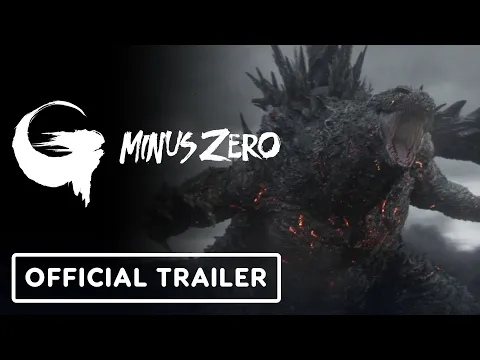
The reviewer and trade pulse around Godzilla Minus Zero is best characterized as confident-but-circumspect. The official trailer has drawn strong organic viewership on the Toho channel — 1.1 million verified views is a healthy signal for a Japanese-language franchise film — and the Indian trade desks are tracking the Hindi rollout with genuine interest rather than dismissiveness. The Times of India framed the film as a global box office challenger to Ramayana, which is a notable framing choice: it positions the kaiju film as a legitimate competitor in the premium-format space rather than a niche counter-programmer. That framing matters because it shapes exhibitor behavior; a film perceived as a real contender gets its screens held longer.
Top Story Akka Movie 2026 HDHub4u bi | Release Status, Screen Counts, Theatrical Run & Buzz
The consensus matrix across major industry reviewers breaks into three clear reads. The first is the premium-format read: Cinema Express flagged IMAX screen demand as a genuine pressure point, noting that Ramayana’s large-format appetite could put the Godzilla release in doubt on the screens it most needs. This is the bearish thread, and it is grounded in real exhibition economics rather than any skepticism about the film’s quality. The second is the release-strategy read: NDTV reported that the India release was pushed by two weeks specifically to avoid the Ramayana clash, which trade observers interpreted as a disciplined, defensive move that protects opening-weekend premium occupancy. The third is the exhibitor-confirmation read: Bollywood Hungama confirmed PVR INOX’s India showcasing, which is the operational green light that matters most.
The critical expectation on quality is uniformly positive, anchored in the Minus One pedigree. Reviewers who covered the previous film’s Oscar-winning VFX run are approaching Minus Zero as a known quantity on craft — Yamazaki’s authorship of the VFX is treated as a quality guarantee rather than a question mark. The open questions are commercial, not artistic: will the Hindi dub land with the mass audience, will the IMAX screens hold, and will the Ramayana corridor allow the film the breathing room its premium-format model requires. The trade consensus, in short, is a premium-format winner with a smaller but loyal Indian footprint — a film that will overperform on premium occupancy and underperform on raw screen count, and whose Indian profitability hinges on efficiency rather than volume.
Frequently Asked Questions
When does Godzilla Minus Zero release in India?
The Hindi-dubbed version is tracking a November 2026 theatrical rollout in India. Trade reporting notes that the India release was pushed by two weeks specifically to avoid the Ramayana clash, and PVR INOX has confirmed showcasing on its circuit. The film arrives in Hindi, Tamil and Telugu dubbed versions alongside the Japanese original, with premium IMAX and large-format screens forming the core of the release strategy.
Who directs and stars in Godzilla Minus Zero?
Takashi Yamazaki writes, directs and leads the VFX supervision, continuing the authorship model that defined Godzilla Minus One. Minami Hamabe is billed as the lead performer per the IMDb record tt34384661, with veteran character actor Jun Kunimura in the supporting ensemble. The production is mounted by Toho Co., Ltd., with GKIDS handling North America distribution and the official brand channels active on Instagram at @godzilla_toho and @GKIDSfilms.
Where will Godzilla Minus Zero stream after its theatrical run?
The post-theatrical OTT partner for the Hindi version is expected to be confirmed closer to the digital window, with no platform officially locked at this stage. Historically, the Japanese Godzilla titles have landed on global platforms through Toho’s licensing partners, and the Hindi-dubbed digital window is expected to follow the theatrical run by the standard eight-to-twelve-week gap. The successful IMAX theatrical run is expected to strengthen the streaming valuation and drive digital discovery demand.
What is the story of Godzilla Minus Zero?
Two years after war reduced Japan to zero and Godzilla plunged the nation into minus, the country is clawing back a hard-won peace and finally reclaiming daily life. Just as recovery feels possible, a new threat strikes and crushes hope in an instant. The tagline warns that there is no third time and everything ends here. The narrative centres on ordinary survivors who have already lost everything once and must now defend a fragile recovery against a force of annihilation, blending post-war human drama with kaiju spectacle.
Is Godzilla Minus Zero the first Japanese film shot for IMAX?
Yes. Godzilla Minus Zero is the first-ever Japanese production to be Filmed For IMAX, shot entirely in Japan with high-definition digital cameras certified by IMAX and optimized in sound and imagery unique to IMAX screens. This is a significant technical milestone for Japanese cinema and a core part of the film’s premium-format value proposition in India, where the IMAX presentation is the primary driver of the theatrical breakeven model.
Is Godzilla Minus Zero suitable for families and children?
The film carries monster-action intensity consistent with the kaiju genre, and a U/A rating is expected in India upon CBFC clearance, with parental guidance advised for younger children. That said, the Minus One lineage is built on post-war human drama rather than pure spectacle, and the emotional recovery storyline gives the film genuine family appeal for older children and adults. Families should weigh the destruction sequences and intensity level against the age of younger viewers.
Data Attribution Registry
- YouTube (Toho Official): Godzilla Minus Zero Official Trailer – https://www.youtube.com/watch?v=Pu0pH5BuCPM
- IMDb: Godzilla Minus Zero (2026) – https://www.imdb.com/title/tt34384661/
- Bollywood Hungama: Ramayana Paid Previews and Godzilla Minus Zero Limited IMAX Showcasing – https://www.bollywoodhungama.com
HDHub4u Media Integrity
The cinematic data, buzz metrics, and box office forecasts published above have been curated independently by our editorial team. We firmly support the theatrical industry and do not host or encourage unauthorized media downloads.
Compliance Statement: This article is an informational review of Godzilla Minus Zero Movie 2026 HDHub4u bi | Release Status, Screen Counts, Theatrical Run & Buzz and does not host or link to unauthorized media files.